
Design and manufacture of patient-specific 3D surgical guides
3D surgical guides:
definitions and uses
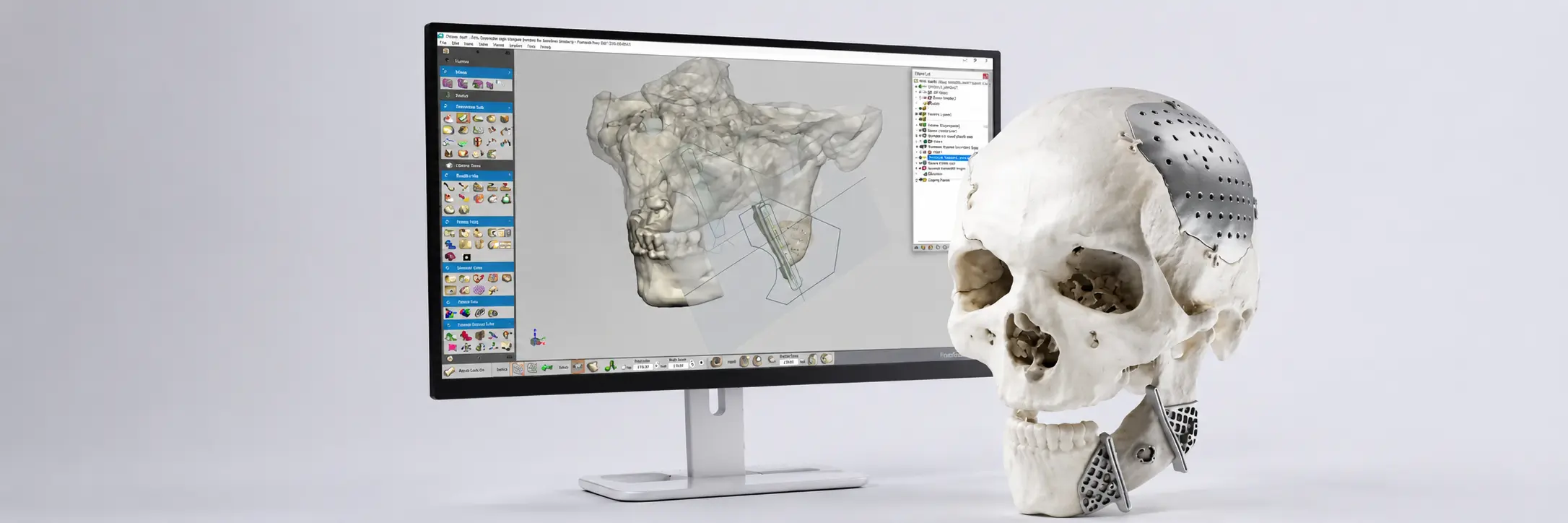
A personalised 3D surgical guide is a medical device designed from the patient’s digital data (CT scan, CBCT, MRI, 3D scan/impression).
A personalised 3D surgical guide is a medical device designed from the patient’s digital data (CT scan, CBCT, MRI, 3D scan/impression).
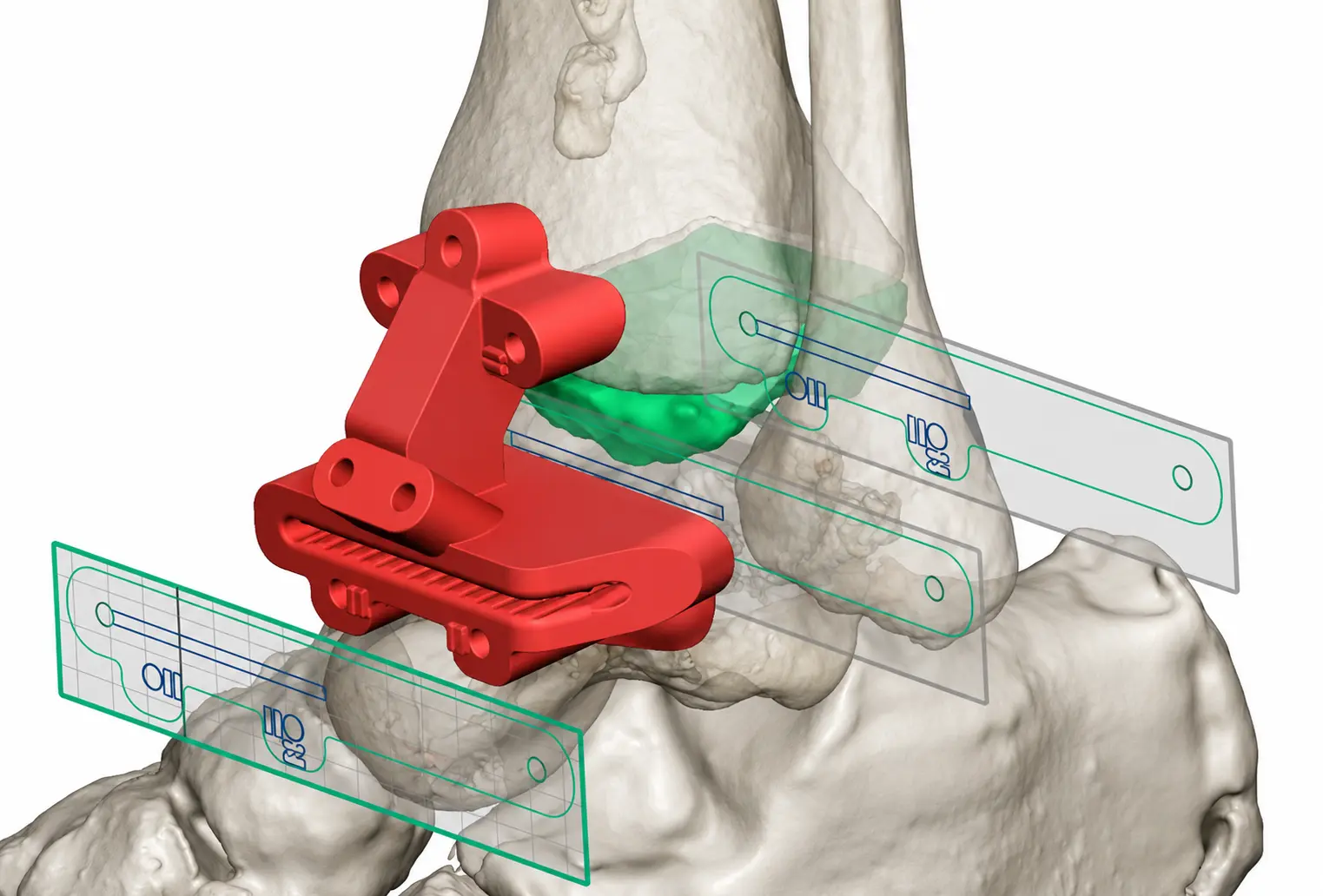
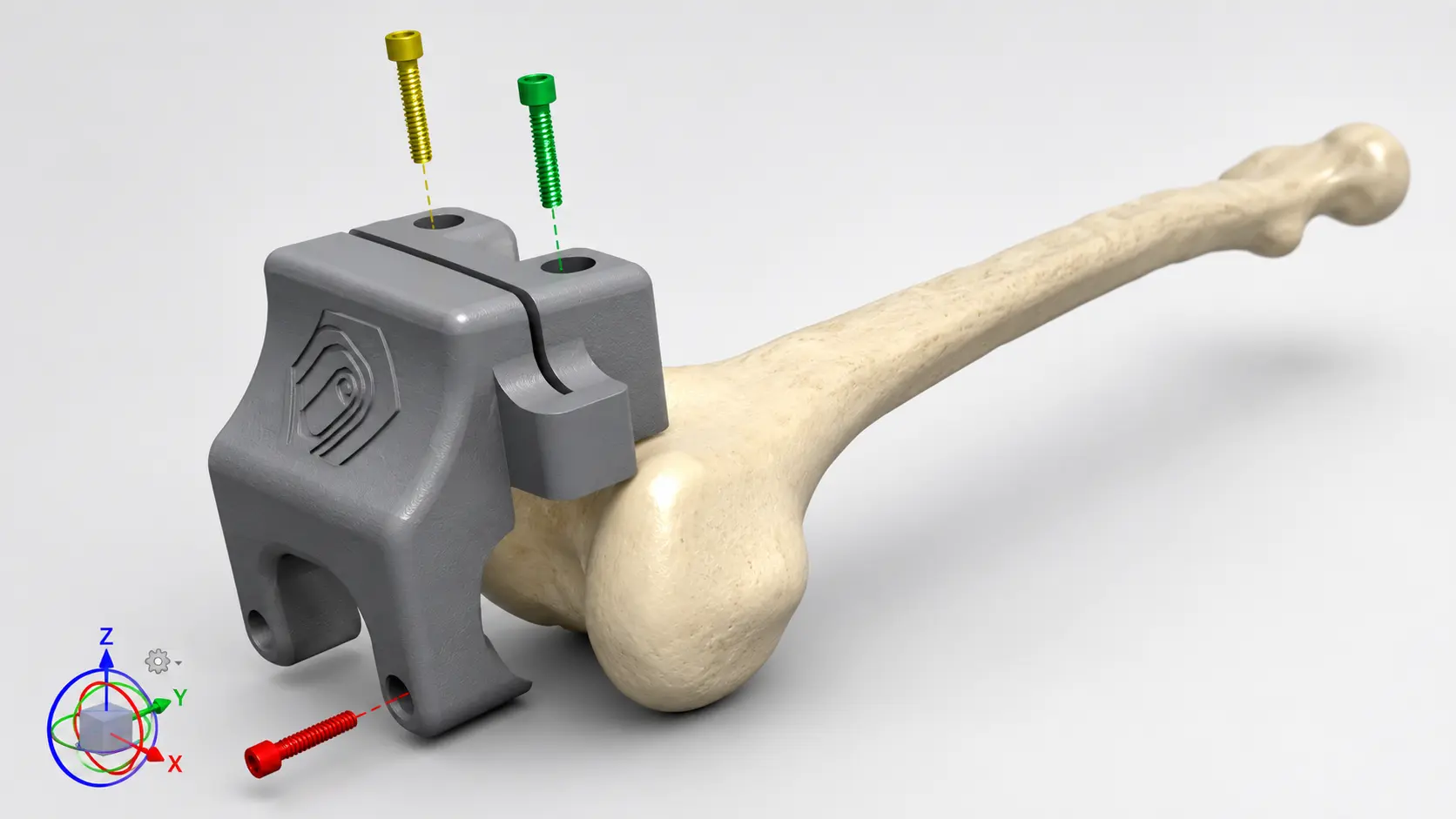
Placed on the anatomical area to be treated, to which it conforms perfectly, it guides the surgeon during osteotomies or drilling, ensuring that the initial surgical plan is followed and that the expected clinical benefit is optimised (respect of tumour margins and/or adjacent structures, precise fit when positioning the implant or performing bone reconstruction, etc.).
Through the stages of segmentation, 3D modelling and computer-aided design (CAD), the patient’s clinical imaging is transformed into a digital twin that serves as the basis for developing the patient-specific device. These stages help reduce operative risk and optimise the functional and/or aesthetic outcome.
How is a custom
surgical guide designed?
Data acquisition and
segmentation
It all starts with collecting information from the patient’s clinical imaging (CT scan, MRI, 3D scan or impression, etc.). The images are then segmented and modelled in 3D using specialised, certified software such as Simpleware, using artificial intelligence algorithms where necessary to isolate the patient’s anatomy with great accuracy and mark the coordinates of points of interest.
Computer-aided
design (CAD)
The patient’s digitised anatomy (or digital twin) is imported into CAD software (e.g. Geomagic Freeform). This is where the surgical planning and guide design take place: drilling trajectories, saw-blade insertion zones for osteotomies, etc. An optional haptic arm makes modelling more intuitive and faster.
Manufacturing
by 3D printing
Once approved, the surgical guide is produced using medical-grade certified 3D printing.
Materials used: resin, plastics or biocompatible metals.
Production: from a single patient-specific guide to a small batch for a dental practice or hospital centre.
Result: a sterilisable medical device, ready for surgical use and fully consistent with your surgical plan.
Benefits of 3D printing
applied to surgical guides

Maximum
accuracy
thanks to additive manufacturing,
layer by layer.

Lower costs and shorter lead times
compared with
traditional methods.

Personalised solutions
tailored to each patient's anatomy
and condition.

Optimised
surgery times
and reduced
intra-operative risk

Compliant with medical standards
Use of
biocompatible materials
How does surgical
planning work?
Digital planning combines medical imaging and virtual modelling to prepare the procedure:
- Segmentation and 3D modelling of data from clinical imaging (CT scan, MRI, CBCT, etc.).
- Surgical planning with simulation of the approach and surgical technique on a digital twin of the patient.
- Design and validation of the surgical guide before manufacture.
- Improved clinical outcomes (functional and aesthetic) thanks to a more precise and less invasive procedure.
What tools are needed
for guided surgery?
-

Specialised segmentation and CAD software.
-

3D scanner / CBCT to capture anatomical data.
-

Medical 3D printer (dental resin, biocompatible materials).
-

Manufacturing platform to control every stage of the process.
What are the different types
of surgical guides?
Surgical guides come in several types depending on the procedure and clinical needs.
- Implant guides for the placement of dental implants.
- Cutting guides used in orthopaedic or maxillofacial surgery.
- Pre-drilling guides to secure trajectories.
- Glenoid guides specific to certain procedures.
- Metal or resin guides depending on the application and clinical constraints.
Innovating in guided surgery
with Twin 3D
Twin 3D supports healthcare professionals in the design and manufacture of personalised surgical guides:
- Access to certified software (Simpleware, Geomagic Freeform) for segmentation and computer-aided design.
- Access to medical 3D printers, biocompatible materials and standards-compliant outsourced printing services.
- Support throughout the project to ensure devices that meet clinical needs.
Solutions offered by Twin 3D

Specialist software

Robotic arms



Training courses
FAQ
By choosing biocompatible, autoclavable materials and building in a traceability protocol (batch number, validated sterilisation) before use in the operating theatre.
They go through preclinical testing followed by regulatory validation (MDR, FDA) to ensure accuracy and safety before clinical use.
Most are single-use, but durability depends on the material and the instruments used. Certain polymers offer greater mechanical strength.
Other medical uses
They trust us









Book a demonstration
Twin 3D supports healthcare professionals in their medical 3D projects. Speak with an expert and discover our solutions during a demonstration.