
Medical 3D prototyping
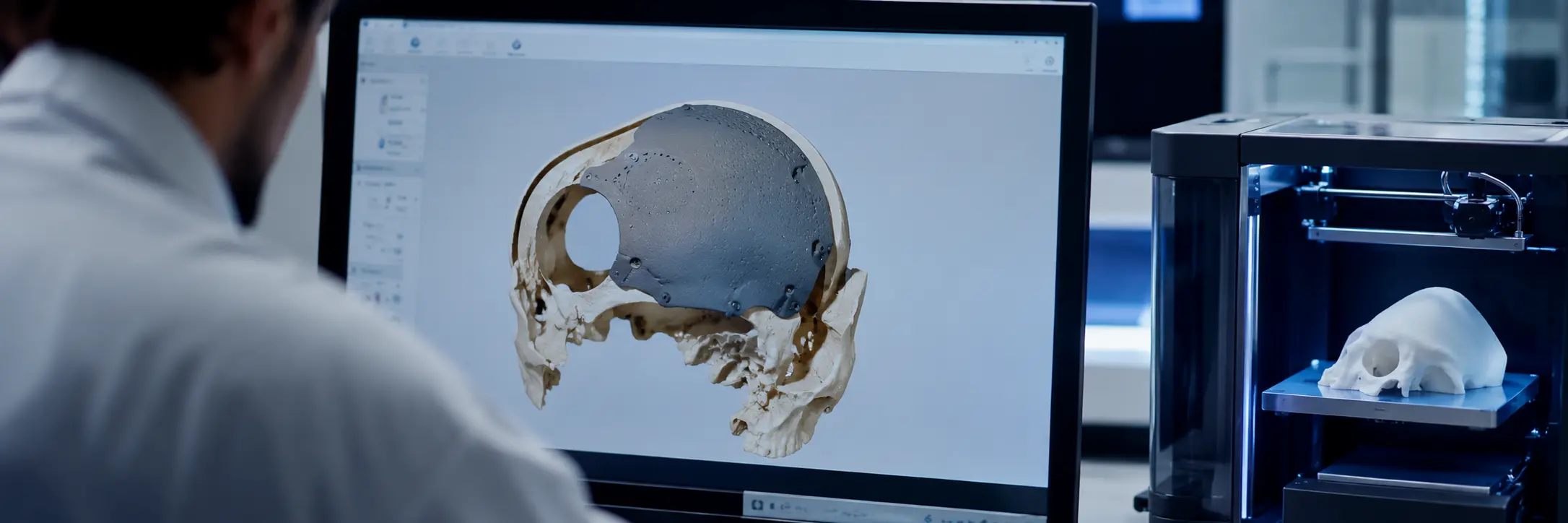
Medical 3D prototyping refers to the range of methods used to design and manufacture medical devices, anatomical models and appliances for the healthcare sector quickly.
Several prototyping techniques exist: CNC machining, injection moulding, laser cutting and selective laser sintering. These processes remain useful for certain applications, but medical 3D printing, based on additive manufacturing, has now established itself as the most flexible solution. It builds parts layer by layer, in plastic, metal or resin, and can reproduce complex shapes adapted to the human body with great precision.
This technology facilitates rapid iteration, design validation and the creation of prototypes suited both to practitioners’ needs and to each patient’s specific anatomy.
The stages of medical prototyping
with Twin 3D
Computer-aided design (CAD)
The first step in the design process is digital modelling. With Geomagic Freeform software, which can be combined with a haptic arm, the designer benefits from force feedback that makes creation even more intuitive and faster. This method makes it possible to design surgical guides, implants, prostheses, orthoses or industrial parts with precision, perfectly adapted to clinical needs.
Medical 3D printing
Once the design has been validated, the printing stage begins. Twin 3D relies on an ecosystem of industrial partners specialising in medical additive manufacturing.
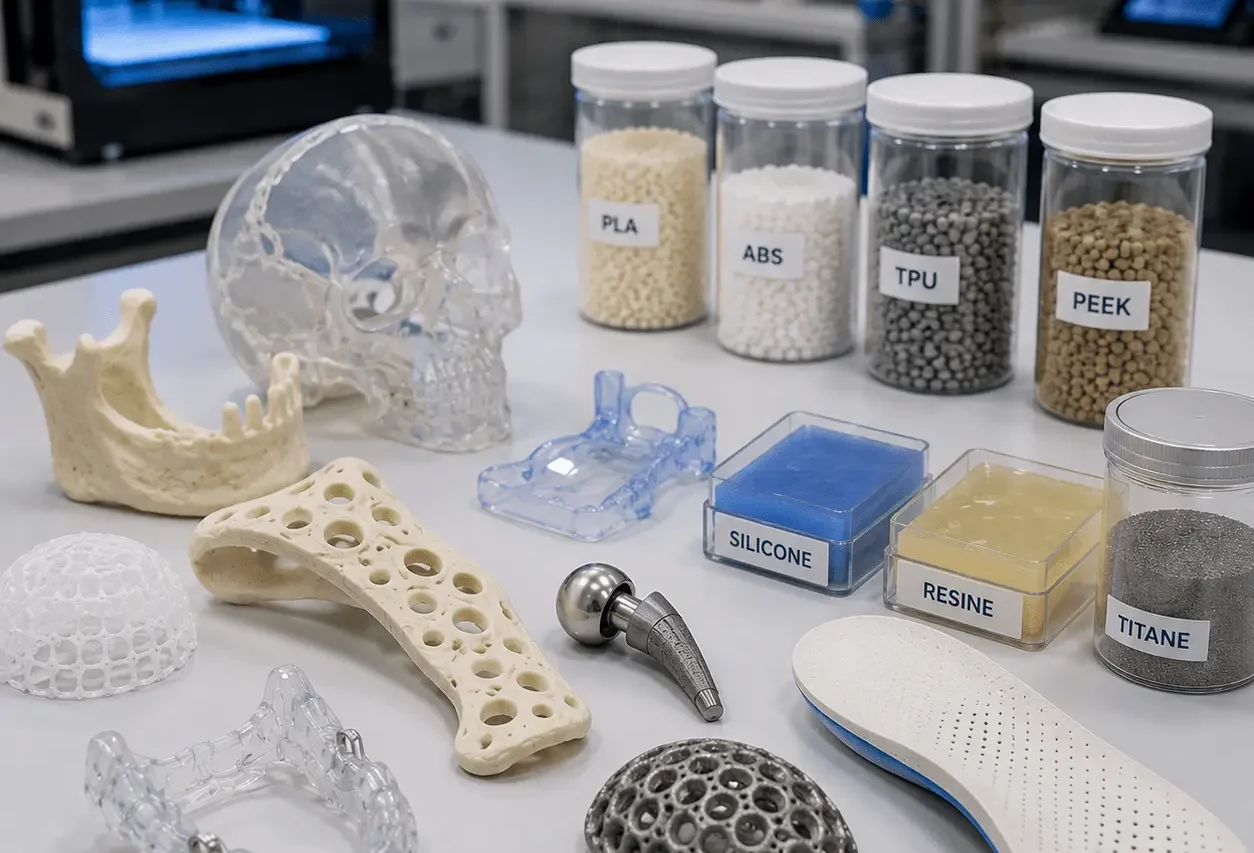
Depending on the project, different technologies and materials may be used: engineering plastics, metals (including titanium), silicones, rigid or flexible resins, as well as biocompatible materials compliant with ISO standards.
Depending on the project, it is possible to produce a single custom-made part or to launch a small series of specific devices, with rigorous quality control.
What are the advantages of medical 3D prototyping?
Using 3D prototyping offers many benefits for the medical sector:
-

Reduced development and manufacturing costs.
-

A faster design process, right through to market launch.
-

Rapid validation of designs and functional testing.
-

Customisation of devices, helping to improve patient care.
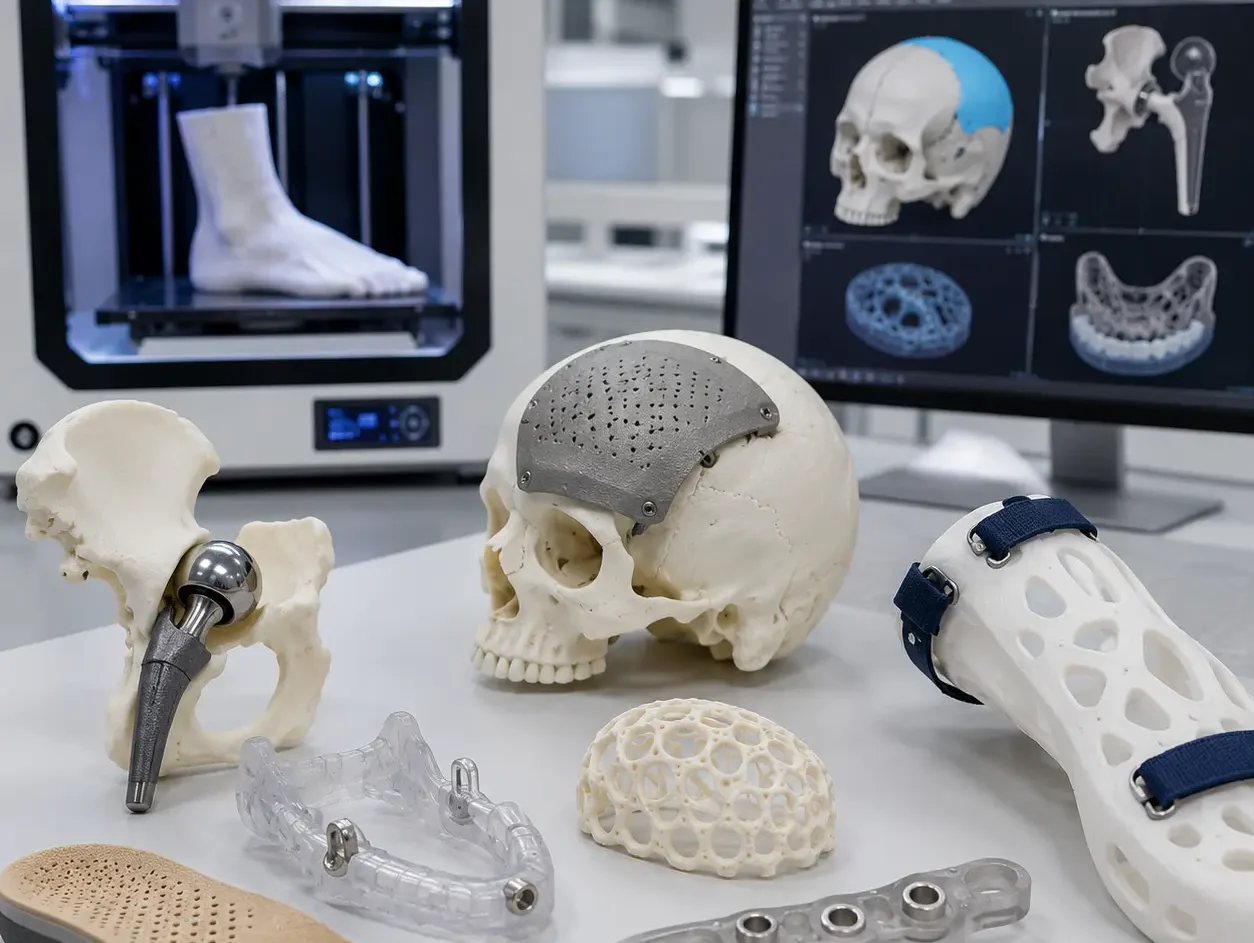
Which medical devices can be prototyped?
Medical 3D prototyping covers a wide range of applications:
- Prostheses adapted to patients.
- Specific, customised implants.
- Functional and ergonomic orthoses.
- Surgical guides to improve operative precision.
- Medical devices
- Custom-made medical equipment and appliances.
Which materials for medical 3D prototyping?
Choosing the right materials is essential to guarantee the quality and safety of prototypes:
- Plastics, silicones and metals for a variety of uses.
- Advanced materials: biocompatible, sterilisable, flexible.
- Industrial standards that ensure robustness and reliability in a demanding medical context.
Innovating in the medical sector with Twin 3D
Our services cover the entire process, from design to production:
- Integrated software and hardware solutions, from design to production.
- Tailored expertise to support your projects, from a single prototype to a small series, with a view to innovation and improved patient care.
Solutions offered by Twin 3D

Specialist software

Robotic arms


Training courses
FAQ
Yes, it is used for surgical simulation, for training students and for explaining a procedure more clearly to patients.
Some plastics deform, whereas biocompatible, autoclavable materials retain their integrity. The choice depends on the end use: demonstration, testing or surgical simulation.
Validation includes strength testing, biocompatibility testing (e.g. ISO 10993), sometimes preclinical trials, followed by possible inclusion in regulatory files (MDR, FDA, ISO 13485).
Other medical uses
They trust us









Book a demonstration
Twin 3D supports healthcare professionals in their medical 3D projects. Speak with an expert and discover our solutions during a demonstration.