
Patient-specific 3D implants
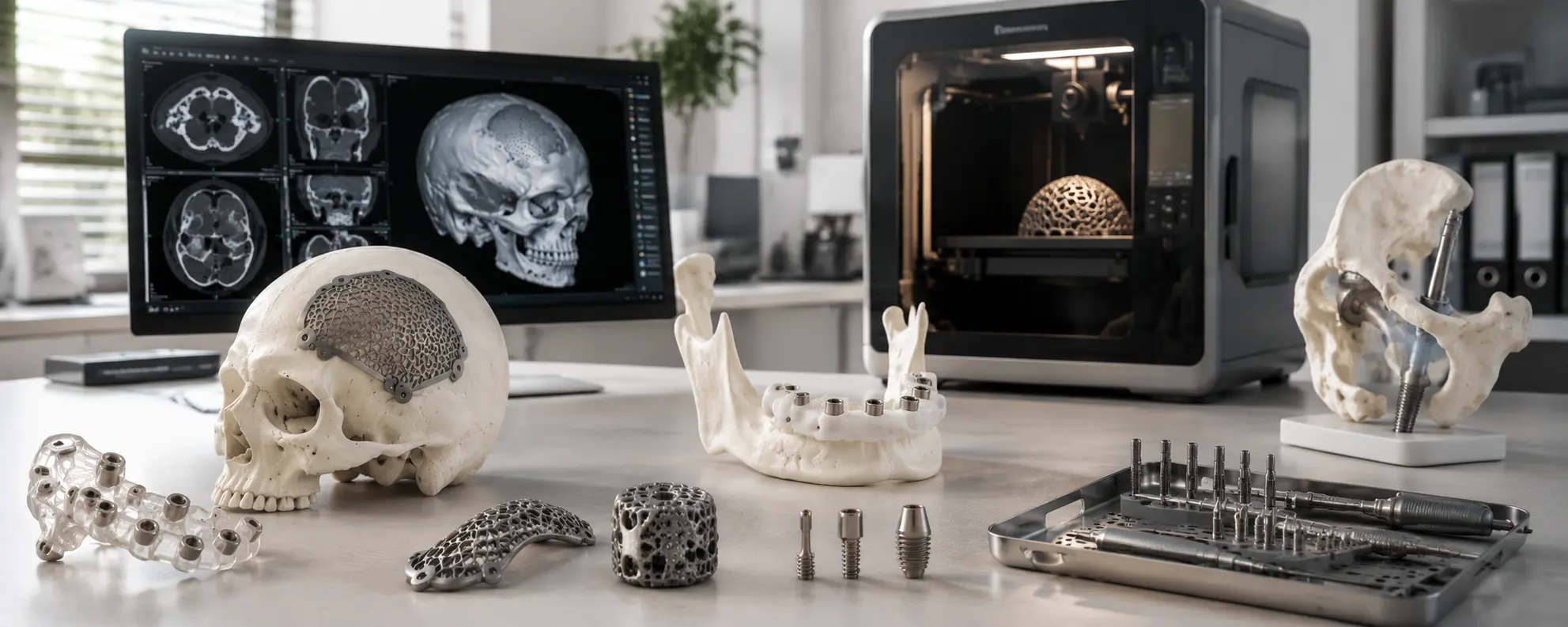
A personalised 3D implant is a custom-made medical device manufactured from the patient’s anatomy. Thanks to the segmentation of clinical imaging (CT scan, CBCT, MRI) and computer-aided modelling, it reproduces the anatomical area to be treated with great precision.
Created by additive manufacturing (layer-by-layer 3D printing), the implant integrates seamlessly with bone tissue and compensates for a bone defect, whether it involves cranial reconstruction, orthopaedic surgery or a personalised dental implant. This process, based on precise surgical planning, minimises complications, improves functional and aesthetic clinical outcomes and ensures greater safety during surgery.
The creation process: from modelling to 3D printing
Data acquisition and modelling
The manufacture of a 3D implant begins with the segmentation of the patient’s clinical imaging (CT scan, CBCT, MRI). These data are converted into a 3D digital model using specialist software capable of accurately isolating the relevant anatomical areas: bone, vascular and nerve structures, tumours, organs, etc.
Implant design
Using the patient’s digital twin, the surgeon and engineers define the characteristics of the implant: shape, dimensions, fixation system, surface textures, internal lattices, etc. The design is produced using medical CAD software, making it possible to simulate and validate the implant and its positioning before manufacture.
Manufacture
by 3D printing
Once the design has been validated, the implant is produced by additive manufacturing, using the layer-by-layer printing principle. A range of biocompatible materials can be used: metal powders such as titanium, high-performance polymers or ceramics. The result is a sterilisable medical device, ready to be fitted during surgery.
What are the advantages of custom-made 3D implants?
3D-printed implants offer several concrete benefits:

Greater precision, minimising any intraoperative corrections or adjustments.

Lower costs and shorter lead times compared with traditional solutions.

Personalised solutions for reconstructive surgery, dental implantology, orthopaedic surgery and maxillofacial surgery.

Improved clinical outcomes and enhanced recovery after surgery (ERAS) (.

An exact fit to the patient’s anatomy and pathology.
What types of 3D implants are there?
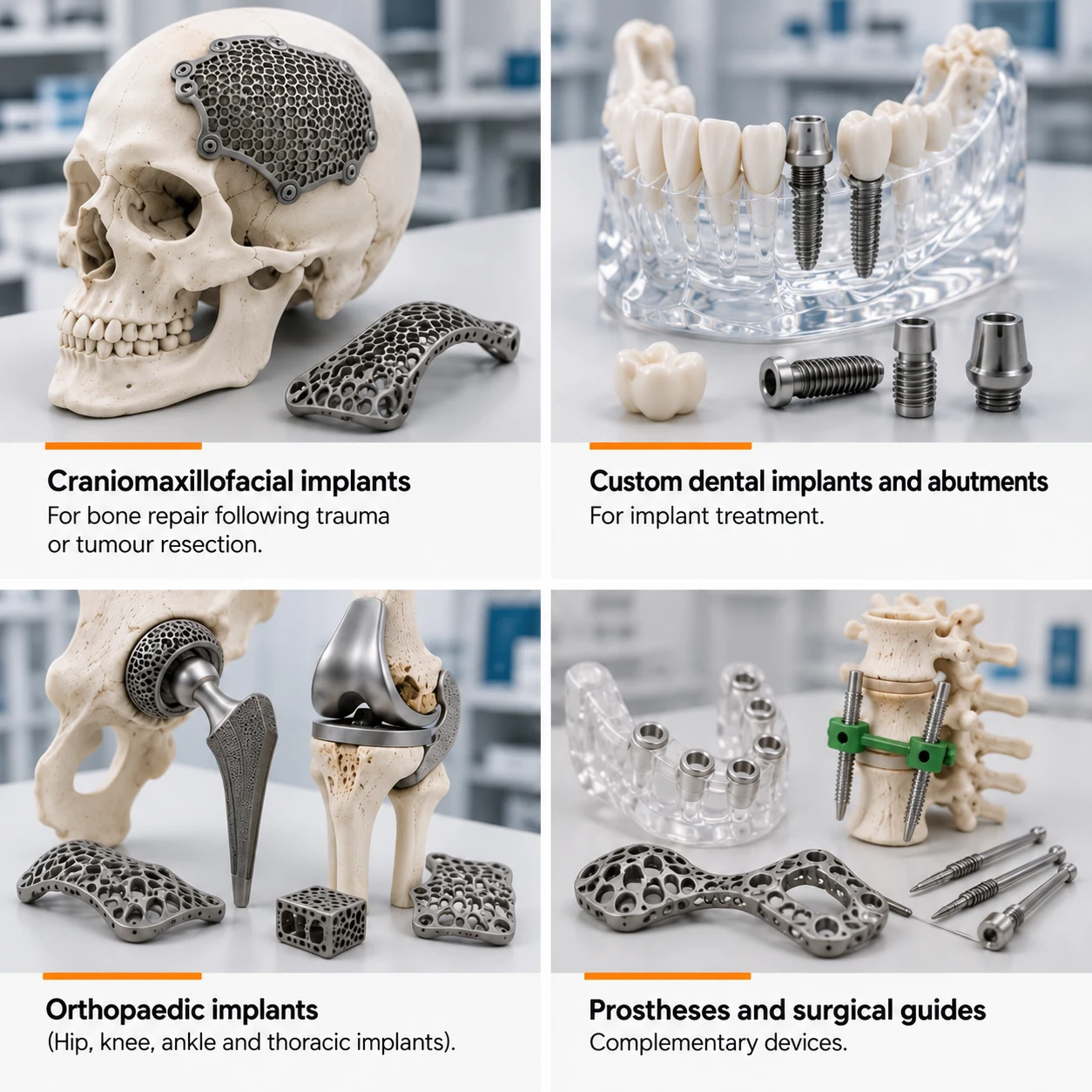
There are several families of implants:
- Craniomaxillofacial implants for bone repair after trauma or tumour resection
- Personalised dental implants and abutments for implant treatment.
- Orthopaedic implants (hip, knee, ankle, thoracic).
- Complementary prostheses and surgical guides.
What materials are used for manufacturing?
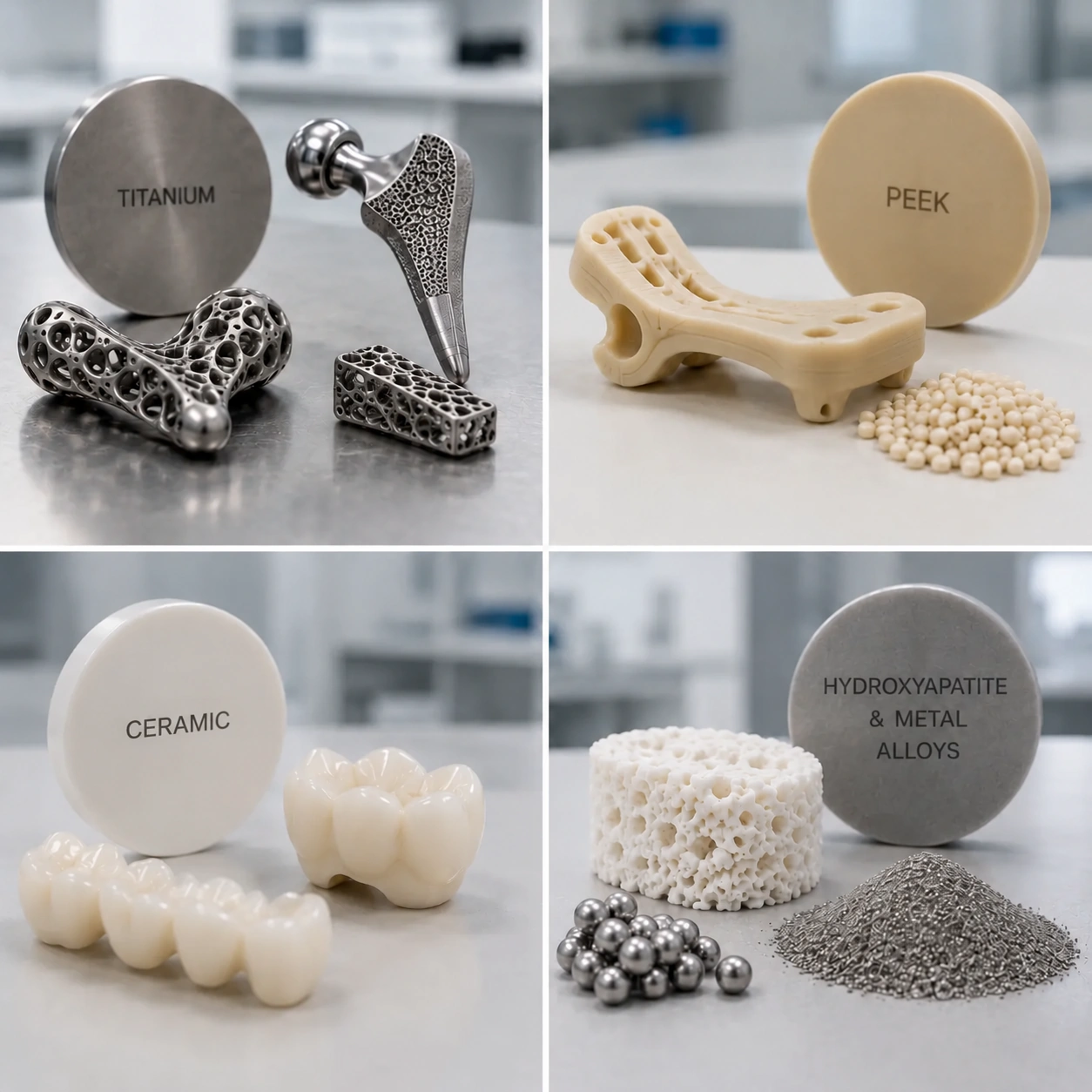
The material depends on the application and the desired outcome:
- Titanium: strong, biocompatible, used in surgery and implantology.
- PEEK: lightweight, durable polymer, an alternative in orthopaedics.
- Ceramic: aesthetic and strong, often used in dentistry.
- Hydroxyapatite and metal alloys: promote bone regeneration and integration with tissue.
How do 3D implants improve surgery?
A custom-made implant changes surgical practice:
-

Guided planning and preoperative simulation.
-

Precise fit, minimising invasive procedures.
-

Reduced risk of errors and shorter operating time.
-

More reliable results and better recovery for the patient.
Implant design and manufacture with TWIN 3D
Twin 3D supports practitioners in the design and manufacture of personalised 3D implants:
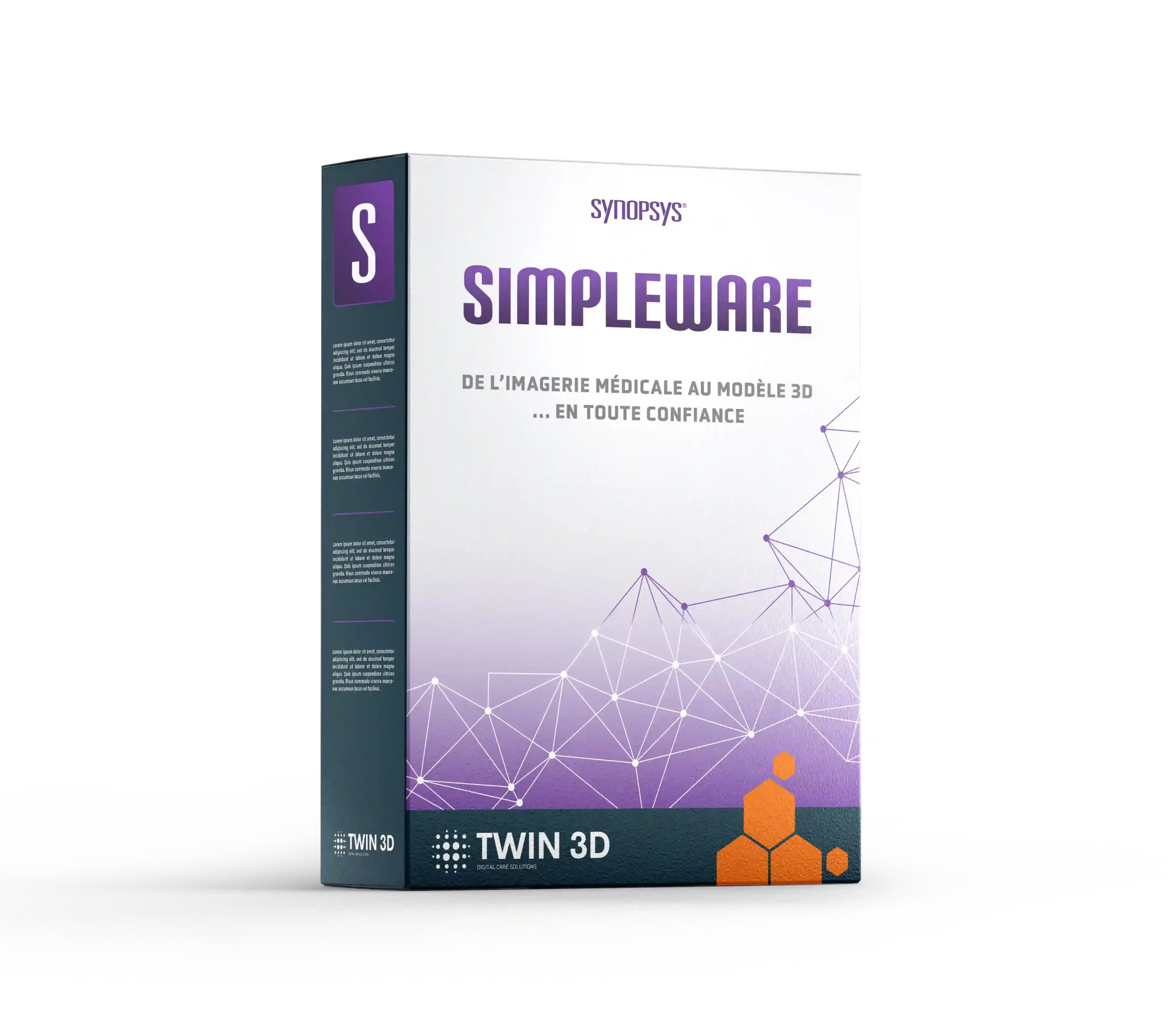
- Provision of certified software for segmentation, 3D modelling, surgical planning and computer-aided design.
- Access to a wide range of medical 3D printers and biocompatible materials compliant with current standards.
- Support at every stage of the project to ensure devices that are perfectly suited to clinical needs and medical regulations.
Solutions offered by Twin 3D

Specialist software

Robotic arms


Training courses
FAQ
Each device undergoes clinical and regulatory validation (MDR, FDA) to ensure accuracy and safety.
They trust us








Book a demonstration
Twin 3D supports healthcare professionals in their medical 3D projects. Speak with an expert and discover our solutions during a demonstration.