
3D innovation at the heart of medical device manufacturing
The use of 3D technologies and additive manufacturing is redefining the way medical devices are designed and produced. By combining 3D modelling, biocompatible materials and made-to-measure production, manufacturers gain in precision, reduce their costs, access new innovations and speed up the development of new products.
Twin 3D helps manufacturers and design offices integrate these technologies into their R&D and production processes, providing reliable solutions that comply with medical-sector standards and are tailored to their innovation needs.
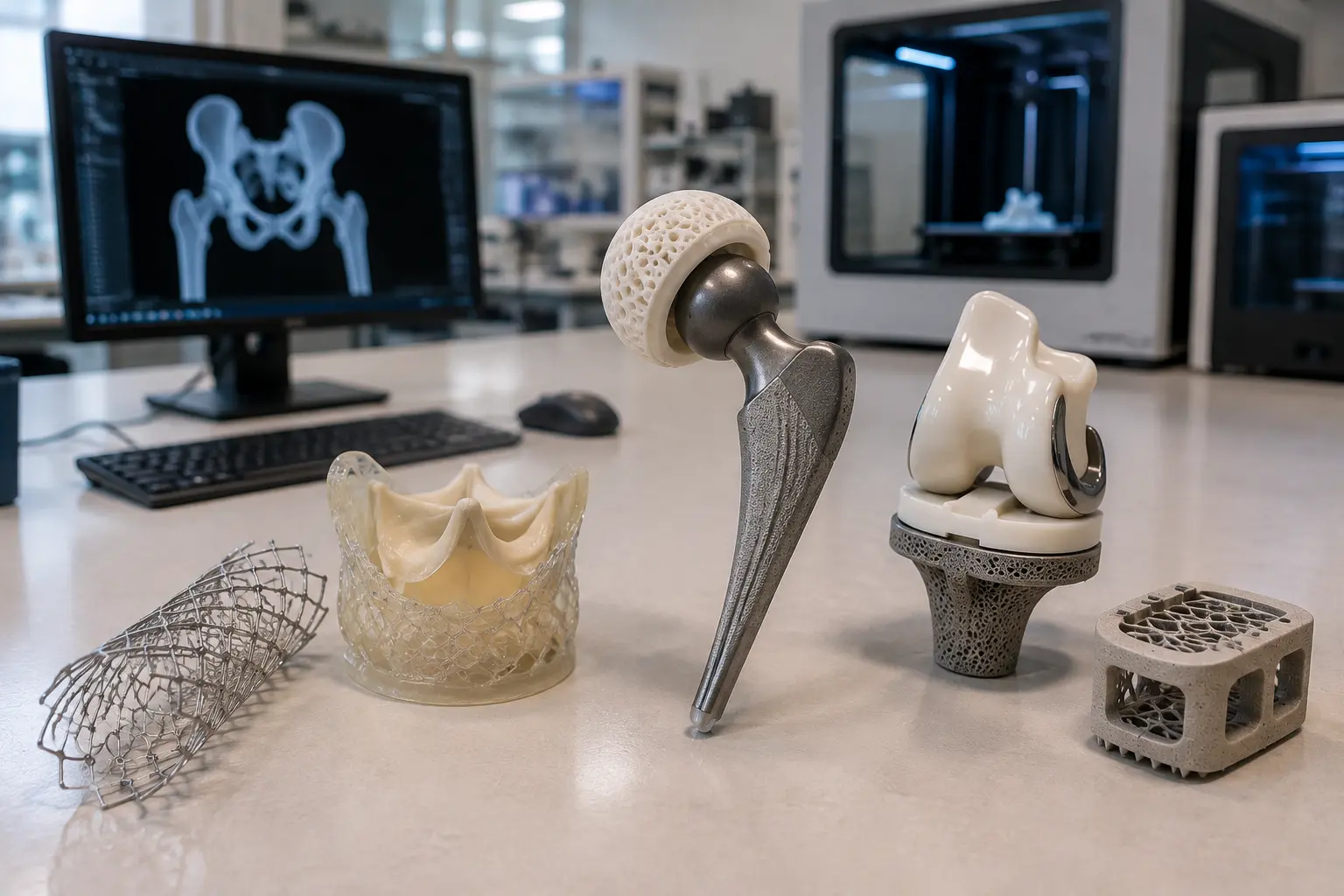
How does additive manufacturing optimise medical device production?
Additive manufacturing has now become a key tool for medical device manufacturers:
- Rapid prototyping: creation and testing of functional models in a matter of hours, without the need for complex tooling.
- On-demand production: manufacture of small batches or specific parts according to clinical needs.
- Design flexibility: the ability to design geometries that cannot be produced with traditional methods.
- Shorter development cycles: faster progression from concept to product validation.
- Patient-specific approach: adaptation to the patient’s anatomy, the type of procedure and the patient’s condition for greater comfort and precision.
These strengths allow manufacturers to gain in agility and competitiveness, while guaranteeing consistent quality across the entire production chain.
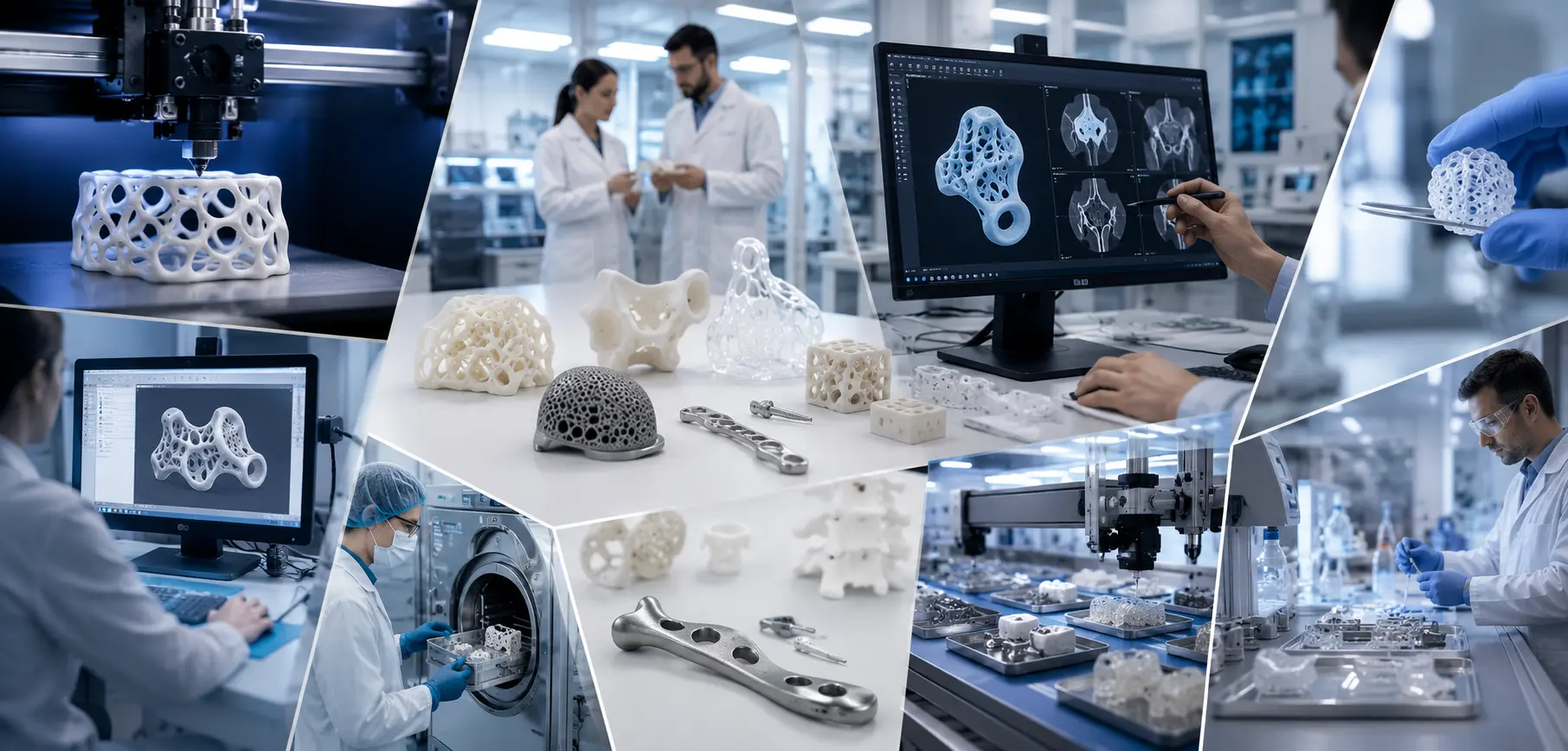
How is 3D applied
to the production of medical devices?
Medical device manufacturers can use 3D technology in many areas:

Made-to-measure orthoses, prostheses
and assistive devices
Tailored to the patient’s morphology for optimal comfort and integration.

Customised surgical guides, implants and instruments
Printed according to the surgical plan defined by the practitioner to improve the precision of procedures and the effectiveness of treatment.

Anatomical
models
Used to prepare complex procedures and validate devices.

Tooling
and functional parts
Low-cost manufacture of production tools or specific mechanical components.

Temporary
devices
Prototypes, splints or test structures intended for clinical research.
These practical applications position 3D printing as a lever for productivity and innovation across the whole medical sector.
Which processes and materials are used?
Medical 3D printing processes vary according to production needs and the nature of the device:
- SLA / DLP (stereolithography): high precision, ideal for visual prototypes and surgical instruments.
- SLS (selective laser sintering): fusion of polyamide powders (PA12) or medical-grade metals for robust, sterilisable parts.
- FDM (fused deposition modelling): a versatile and economical process, ideal for tooling or mechanical prototypes.
- Experimental bioprinting: research on biomaterials and hydrogels for regenerative medicine.
The materials used include:
- Photopolymer resins for precision and transparency.
- Engineering polymers (PEEK, PETG, TPU) for mechanical strength.
- Medical-grade metals (titanium, stainless steel) for implants and instruments.
- Biomaterials and silicones for devices in direct contact with the human body.
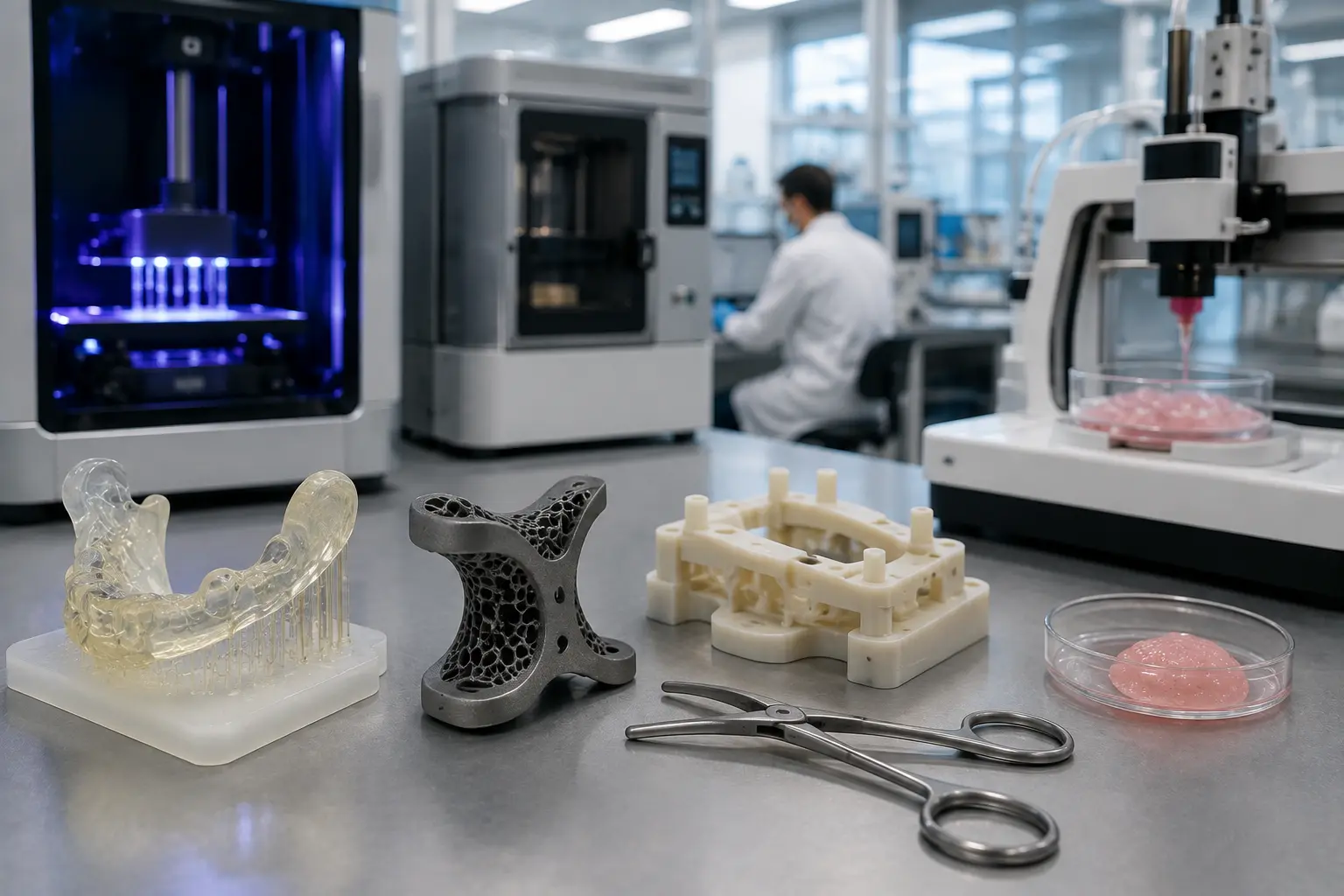
What are the benefits for manufacturers?
Adopting 3D printing in the industrial medical sector offers new, tangible benefits:

Time
savings
From design to validation, development cycles are shortened.

Lower production costs
Fewer machining steps and less material waste.

Improved precision
Printed parts meet the strictest tolerances.

Continuous adaptation
The ability to adjust the design based on clinical feedback or surgeons’ needs.

Logistics optimisation
Local or decentralised production to reduce stock and delivery times.

In vitro
simulation
Testing of the devices developed (resistance to stress, fluid circulation, etc.)
How Twin 3D supports medical device manufacturers
Twin 3D supports medical-sector manufacturers at every stage of their innovation and production process:
- Certified modelling software: for the design of medical devices compliant with traceability standards.
- Medically validated materials: resins, polymers, metals and biomaterials compliant with ISO and CE requirements.
- Comprehensive technical support: installation, maintenance, engineer training and on-site assistance.
- Certification support: help with technical documentation and the transfer to MDR-, FDA- and ISO 13485-certified production.
Our goal: to accelerate the manufacture of innovative medical devices while guaranteeing quality, compliance and reliability.
Solutions offered by Twin 3D

Specialist software

Robotic arms



Training courses
FAQ
Both are available, depending on the situation and the software. Twin 3D adapts to each organisation: perpetual licences suit facilities that are already equipped, while annual subscriptions include maintenance, updates and ongoing technical support.
Other sectors of the medical industry
They trust us









Book a demonstration
Twin 3D supports healthcare professionals in their medical 3D projects. Speak with an expert and discover our solutions during a demonstration.