
Dental 3D printing: a revolution for laboratories and dental technicians
Dental 3D printing is redefining the working methods of laboratories and dental technicians. It simplifies the design and manufacture of prostheses, splints, implants and surgical guides, while offering unprecedented precision and repeatability. Thanks to digital modelling and biocompatible resins, each piece is adapted to the patient’s anatomy.
Twin 3D supports dental professionals through this evolution, providing certified software solutions that connect the entire digital workflow, from intra-oral scan to final manufacture.
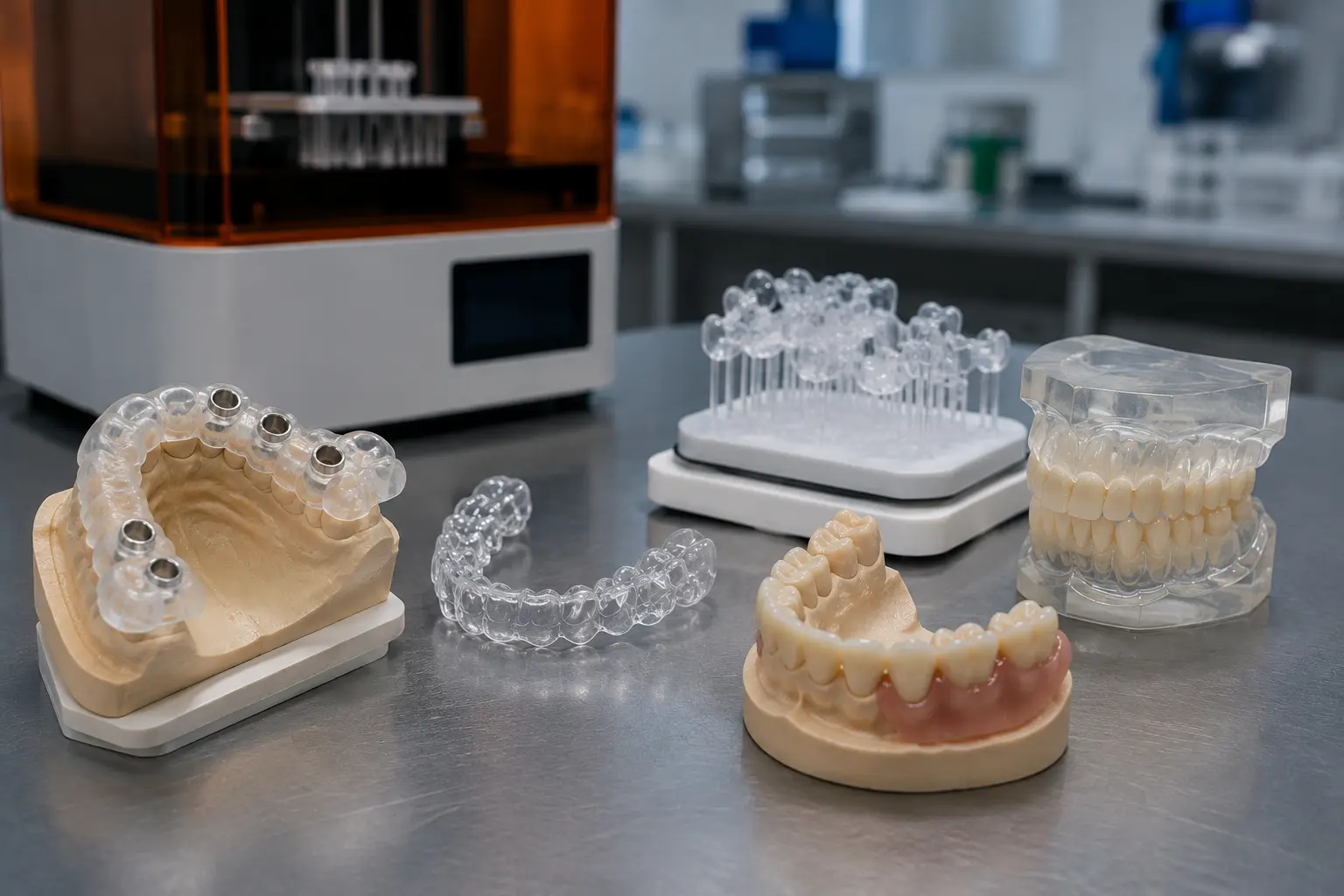
The role of 3D printing in the dental digital workflow
In modern laboratories, 3D printing naturally completes the digital production workflow.
- From impression to digital model: the intra-oral scanner captures the patient’s dentition and creates a high-precision 3D file.
- Computer-aided design (CAD/CAM): laboratories model crowns, bridges or splints before printing.
- Additive manufacturing: the dental 3D printer deposits liquid resin or polymer powder layer by layer until the final shape is achieved.
- Post-processing and finishing: cleaning, light-curing and adjustment ensure a functional and aesthetic result.
This process shortens lead times, improves quality and standardises the production of dental devices.
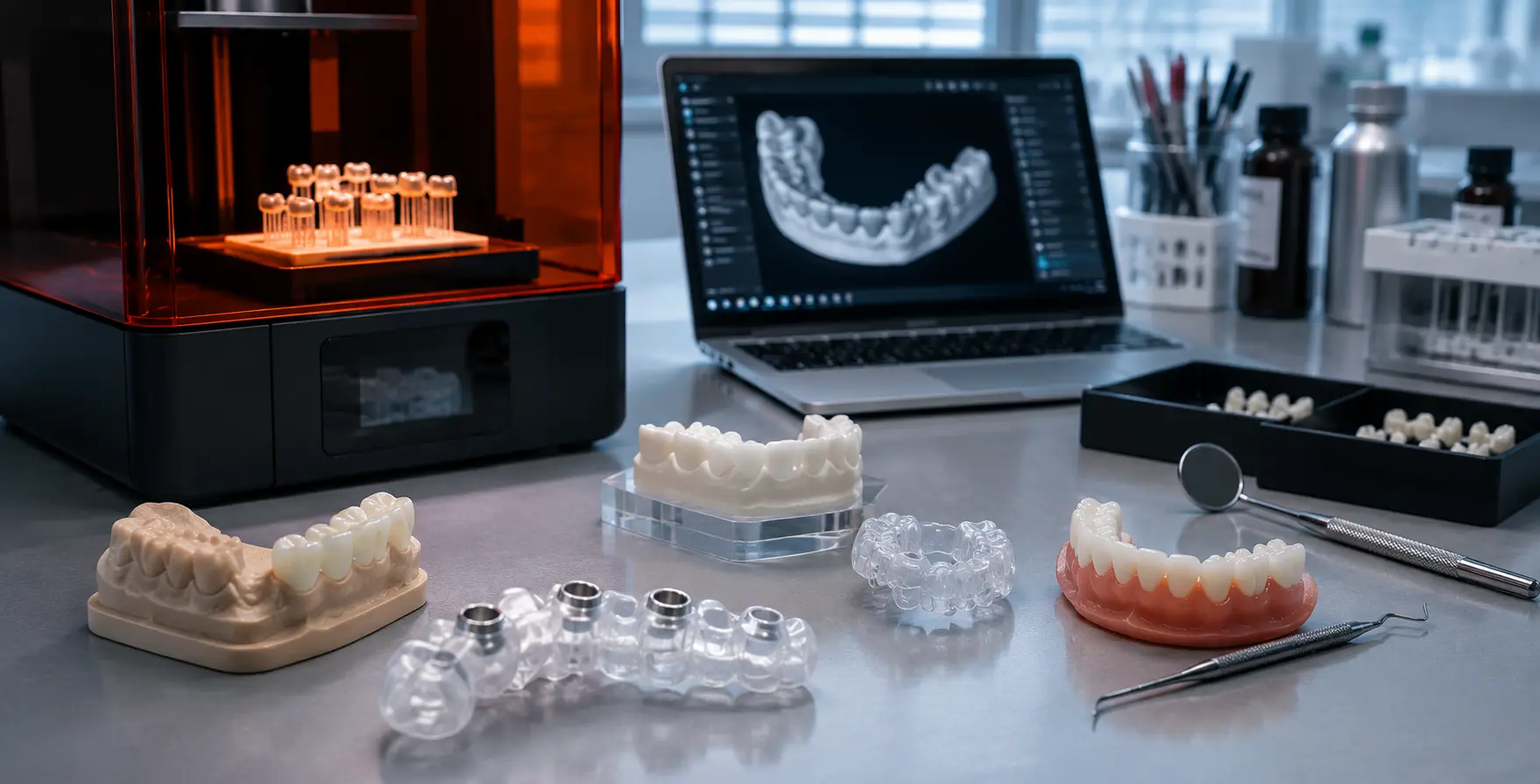
What types of prostheses can be 3D printed?
3D printing makes it possible to produce a wide range of dental prostheses and medical devices:

Crowns and bridges
Ultra-precise manufacturing from digital models, with an optimal fit.
Orthodontic and occlusal splints
Improved comfort, fast and repeatable design.

Surgical guides
Custom manufacturing for surgical planning and implants.

Anatomical models
Teaching tools or trial models for use before an procedure.
Which processes and materials are used?
Dental 3D printing materials are chosen according to the type of prosthesis and the level of clinical requirements:
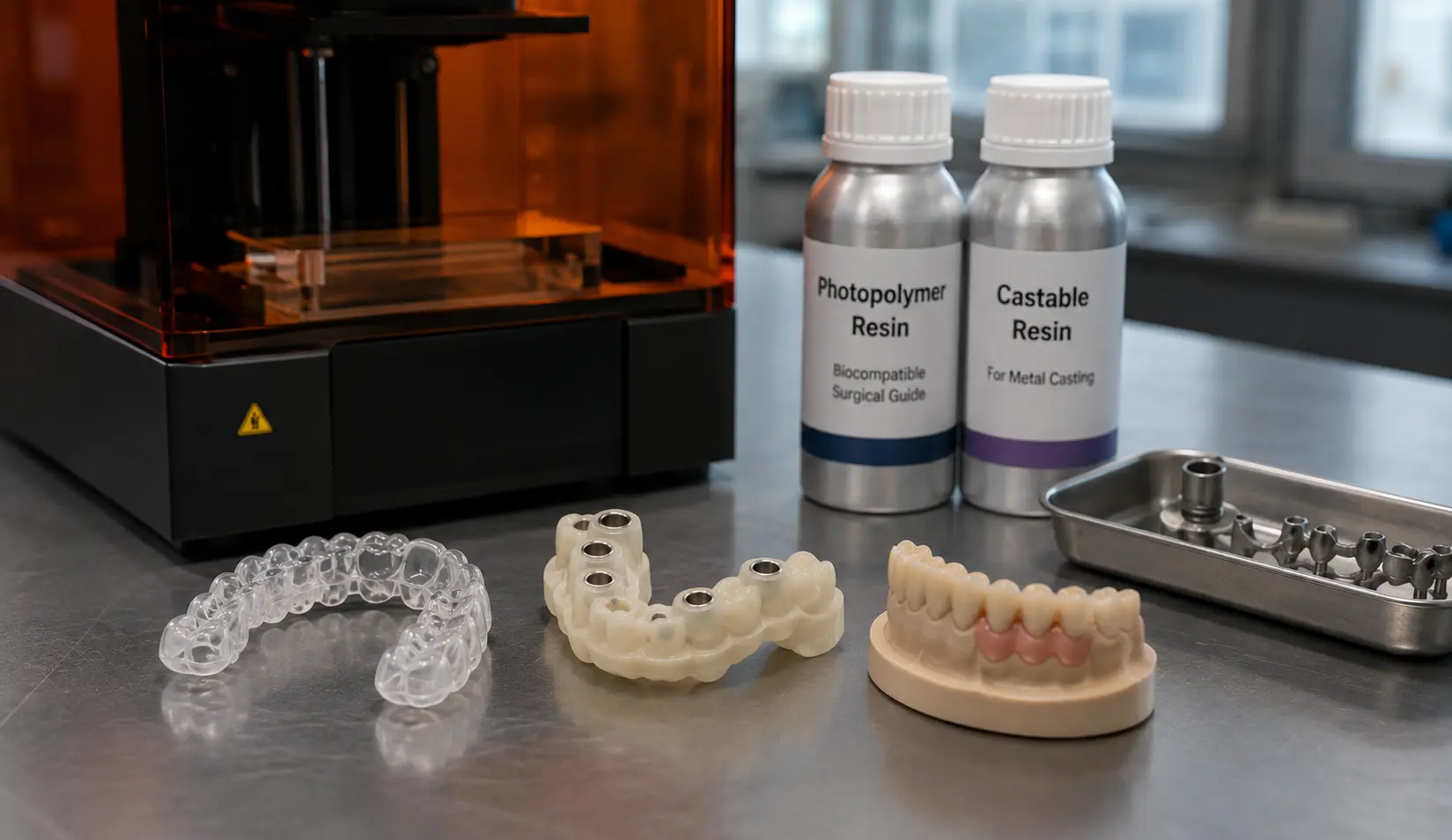
- Photopolymer resins: for models, surgical guides or splints.
- Castable (burn-out) resins: suited to metal casting for definitive frameworks.
- Biocompatible ceramics and polymers: for durable parts in contact with the mouth.
- Medical-grade metals: used for certain implants or prosthesis frameworks.
As for processes, the most common are:
- SLA / DLP: high precision for liquid resins.
- SLS (selective laser sintering): strength and fine detail for engineering polymers.
How to choose a dental 3D printer?
The choice of a dental 3D printer depends on several technical and clinical parameters:
-
- Type of material used (resin, polymer, metal).
-
- Printing technology (SLA, DLP, SLS).
-
- Build volume (large parts or single models).
-
- Compatible software (CAD/CAM, dental CAD/CAM).
-
- Post-processing requirements (curing oven, automated cleaning).
Twin 3D helps professionals choose the most suitable solution, taking into account their needs for speed, precision and cost-effectiveness.
What are the benefits of 3D for dental laboratories?
Adopting dental 3D printing brings immediate benefits to laboratories:

Time
savings
a crown printed in a few hours instead of several days.

Reduced production costs
thanks to the elimination of moulds and the optimisation of materials.

Improved precision
faithful reproduction of impressions and a perfect fit in the mouth.

Tailor-made customisation
each piece adapts to the patient’s morphology.

Traceability and repeatability
all files remain stored and editable at any time.
Compliance and traceability: building quality in from the manufacturing stage
Dental laboratories must meet strict standards for quality and biocompatibility. 3D printing facilitates the digital traceability of each piece: printing parameters, material batches, machine calibration.
This data ensures manufacturing that complies with the European regulation (MDR) and ISO 13485 standards. Twin 3D provides certified solutions and control tools to standardise manufacturing and ensure long-term reliability.
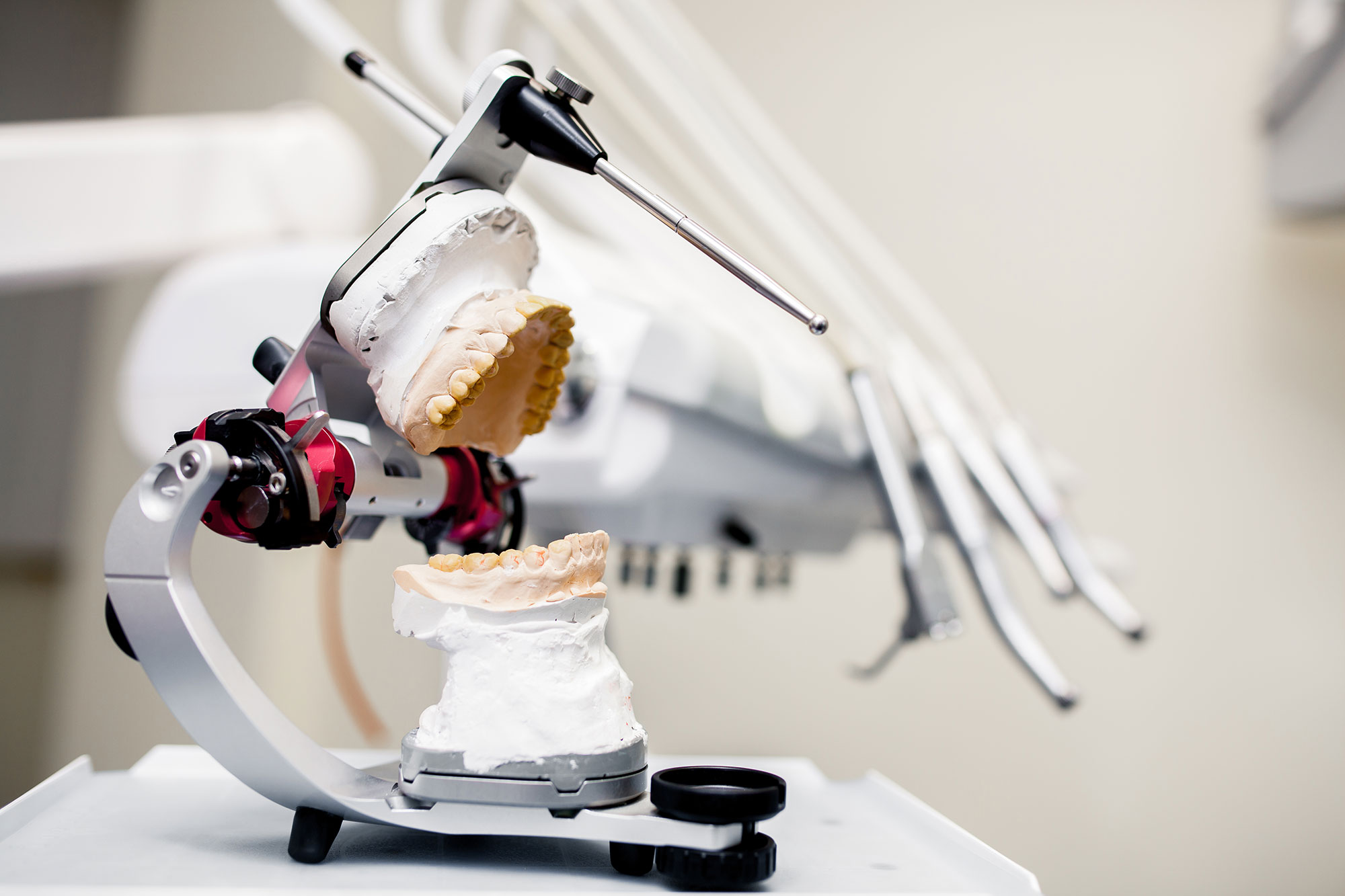
Solutions offered by Twin 3D
Twin 3D supports dental laboratories in their digital transition by providing:
- Certified CAD/CAM software for dental design and modelling.
- Complete technical support: installation, configuration, maintenance, technician training.
- Advice on integrating the digital workflow: intra-oral scanner, modelling, printing and post-processing.
- Complete ecosystem: integration of our solutions with your software and equipment and/or access to our network of partners specialising in 3D printers, scanners and regulatory certification.
The aim: to ensure reliable, repeatable manufacturing that meets the quality standards of the dental sector.
FAQ
We offer both models. The annual licence includes software updates, technical support and equipment maintenance.
They trust us






Book a demonstration
Twin 3D supports healthcare professionals in their medical 3D projects. Speak with an expert and discover our solutions during a demonstration.