
3D software and additive manufacturing supporting university research
Digital twins and 3D printing offer real value for healthcare teaching and research. They make it possible to model anatomy, simulate interventions, test concepts and train future healthcare professionals more effectively.
At Twin 3D, we support universities, health faculties and engineering schools in integrating 3D technologies into the heart of their teaching and scientific activities. Our solutions make it possible to train students, equip university laboratories and facilitate collaboration between teachers, researchers and industry.
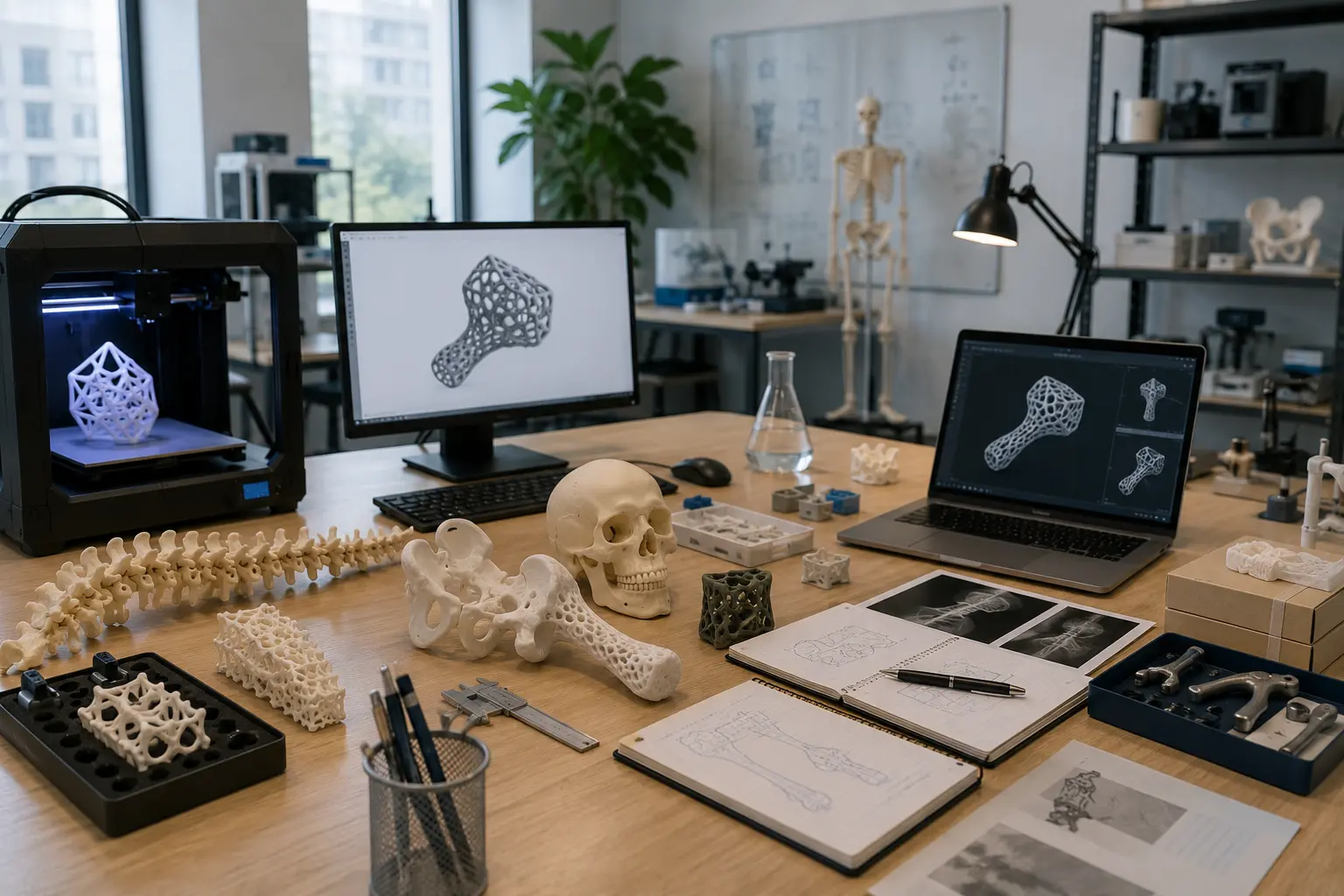
How do 3D technologies help medical and allied health students?
- Visual, hands-on learning: digital twins and 3D-printed anatomical models replace abstract diagrams and make the human body easier to understand.
- Realistic simulation: students can practise on virtual or printed anatomical models, rehearsing surgical or medical procedures in conditions close to real life.
- Applied research projects: students take part in designing prototypes, assistive devices or medical devices within interdisciplinary projects.
- Development of digital skills: mastery of modelling, design and additive manufacturing is becoming a key skill for future healthcare professionals.
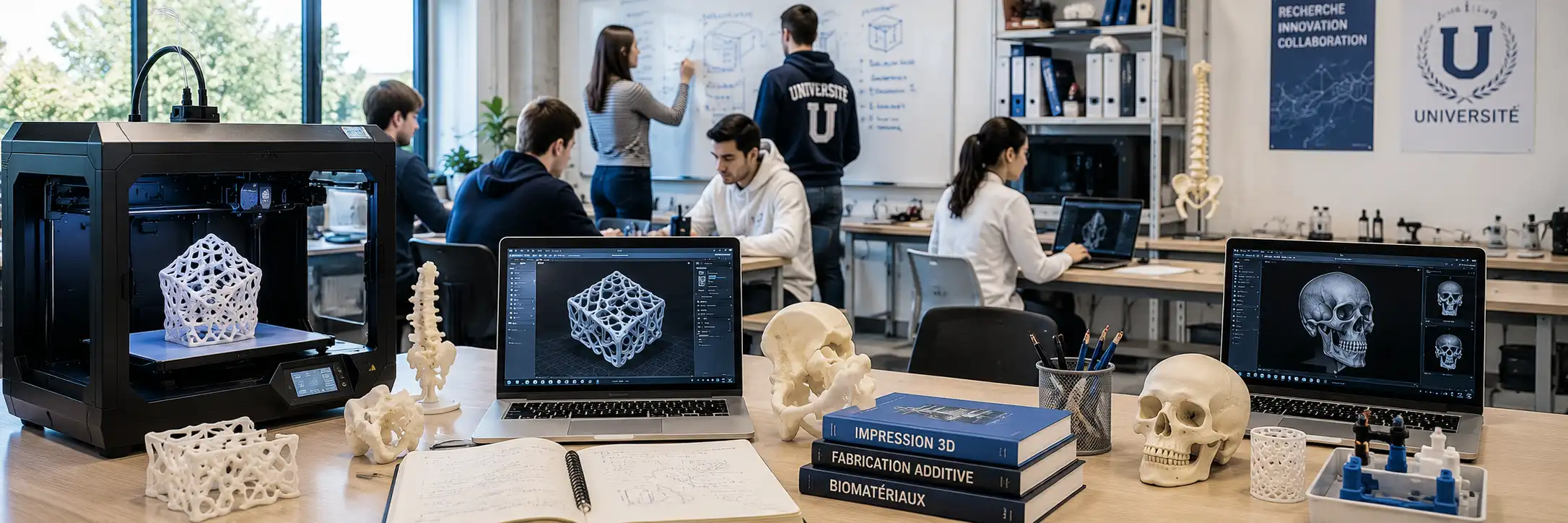
How do 3D technologies support university research?
For universities and research centres, 3D is a strategic tool serving medical innovation:

Rapid prototyping
it makes it possible to design, test and improve medical or surgical devices at a lower cost.

Anatomical and biomechanical studies
digital twins and printed models faithfully reproduce the structures of the human body, facilitating scientific analysis and experimental validation.

Biomaterials research
laboratories are exploring new materials — polyamides, resins, hydrogels — for the design of implants and regenerative structures.

Hospital–university collaborations
digital twins and 3D printing promote technology transfer between researchers, industry and university hospitals.
What tools and materials are available to support teaching and research?
Twin 3D provides universities and laboratories with the technical means they need to fully integrate 3D printing into their teaching and scientific activities.
- Certified segmentation, 3D modelling and design software: to digitise anatomical models, simulate interventions and develop experimental medical devices.
- Technical and educational support: installation, maintenance, teacher training and assistance with student or research projects.
- A complete ecosystem: integration of our solutions with your software and equipment and/or access to our network of partners specialising in 3D printers, scanners and regulatory certification.
By combining these tools with its expertise in medical printing, Twin 3D supports universities in training students, developing research projects and making the most of scientific innovation.
FAQ
Yes. Twin 3D offers training for teachers, researchers and technicians so that modelling and additive manufacturing can be effectively integrated into healthcare curricula.
More immersive training, more experimental research and better collaboration between academic and industry stakeholders.
Yes. Our tools are built on standard formats (STL, OBJ, DICOM) and integrate easily into simulation platforms and teaching laboratories.
Twin 3D works with universities, university hospitals and research centres to design innovation programmes, equip laboratories, develop applied research projects and respond to local, national or European calls for projects (CfPs).
Other players in research and education
They trust us









Book a demonstration
Twin 3D supports healthcare professionals in their medical 3D projects. Speak with an expert and discover our solutions during a demonstration.