
3D software and 3D printing for orthopaedics
3D printing in orthopaedics is transforming the way devices, orthoses and prostheses are designed and manufactured. Thanks to digital design and additive manufacturing, it is now possible to produce, layer by layer, devices that are better suited to the patient’s anatomy, while shortening lead times and improving comfort.
At Twin 3D, we work alongside prosthetists-orthotists, laboratories and healthcare centres to develop innovative orthopaedic devices, designed to optimise rehabilitation and quality of life.
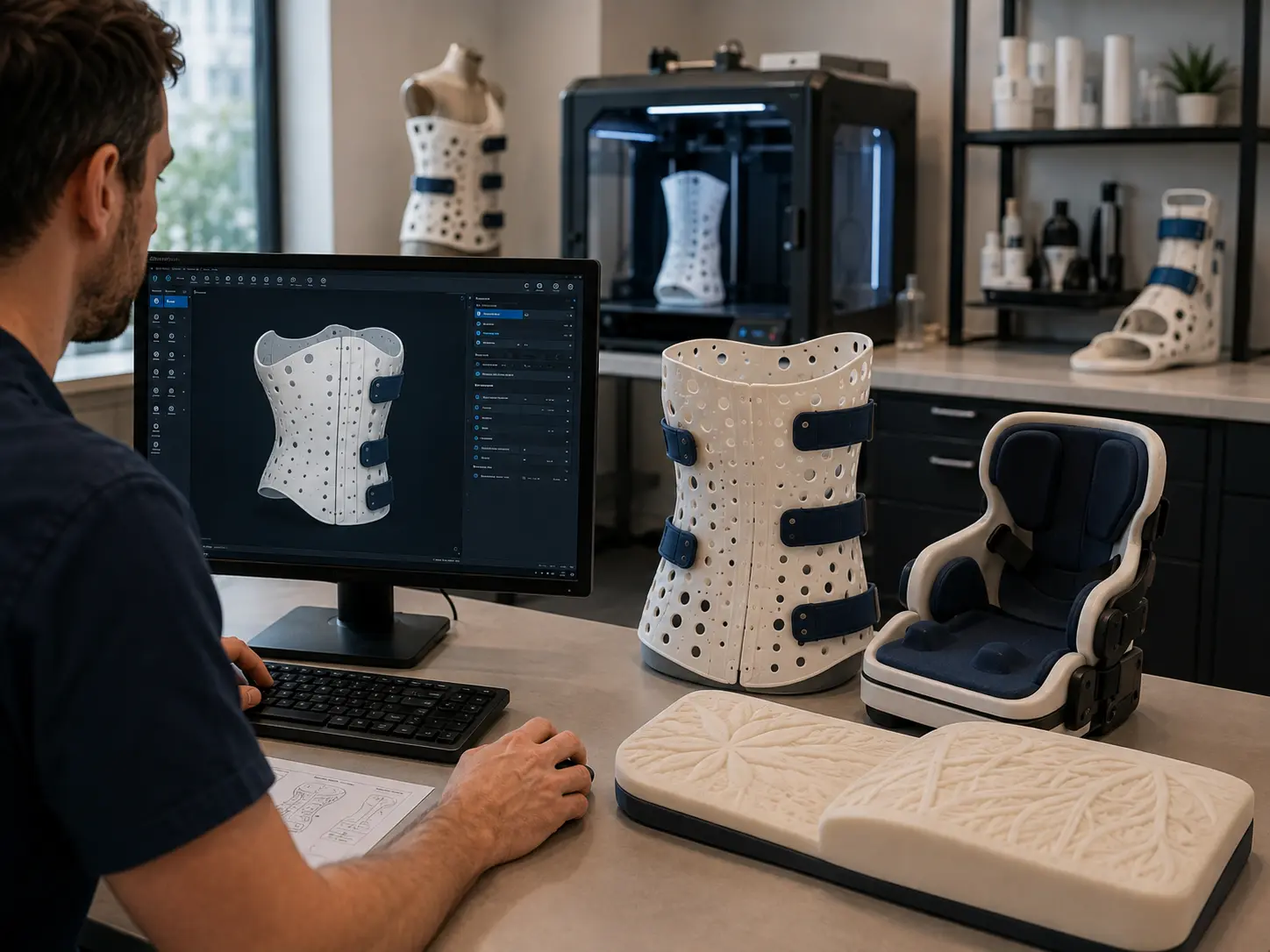
How does 3D printing work in orthopaedics?
The manufacturing process relies on a structured digital workflow:
- 3D scanning: scan or digital cast of the anatomical area of interest (upper/lower limb, torso, full body, etc.)
- Digital modelling: use of design software (CAD) to design the device (orthosis, prosthesis, splint, brace).
- Additive manufacturing: the 3D printer deposits the material layer by layer to produce the final part.
Finishing and fitting: sanding, addition of reinforcements or integration of mechanical parts. - Fitting: clinical trial and adaptation to the patient.
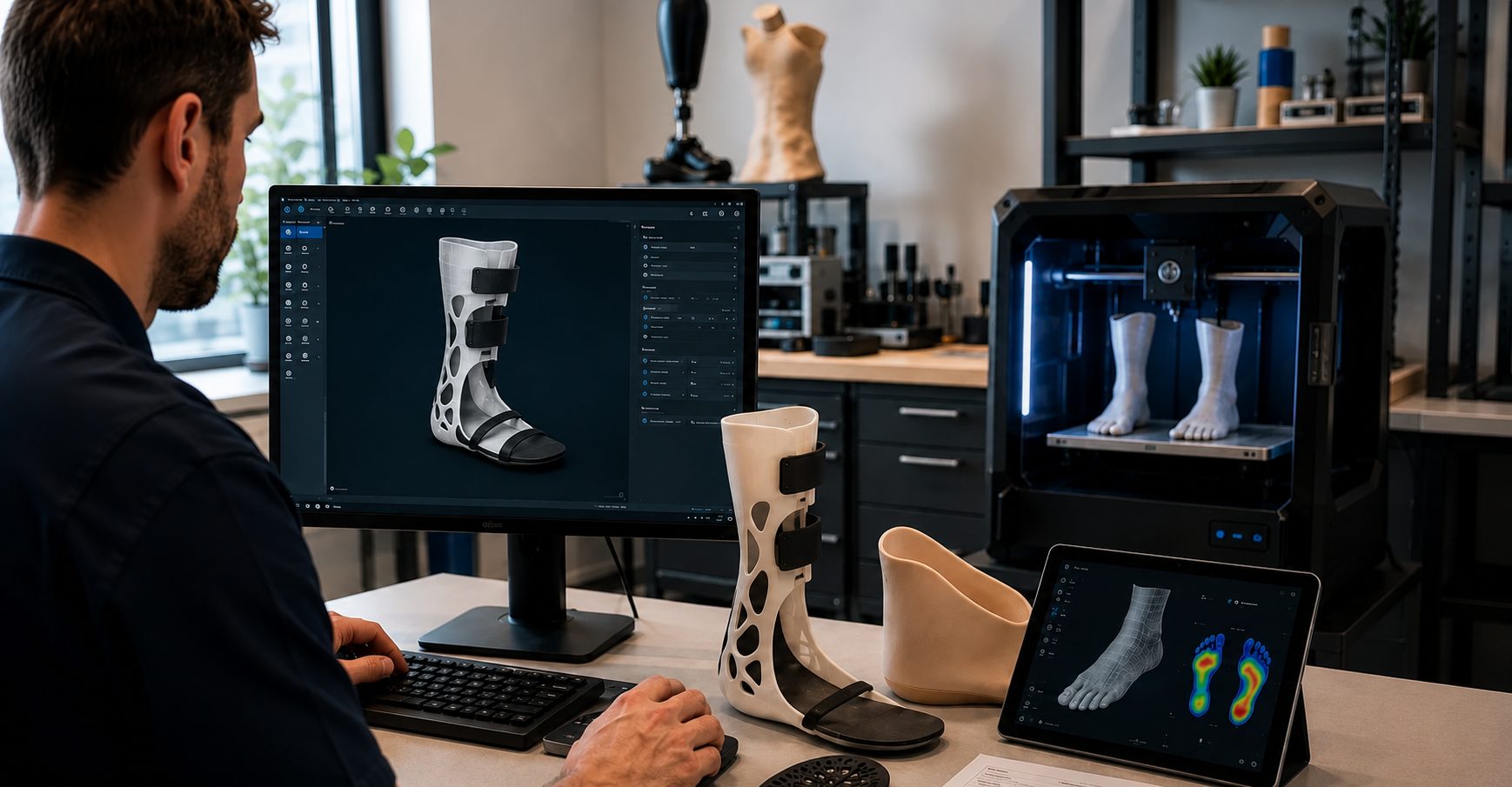
What are the advantages of printed prostheses and orthoses?
Orthopaedic 3D printing brings tangible benefits:

High precision
faithful reproduction of the data from the scan or cast, with the possibility of correcting the anatomy to “position” the patient correctly from a clinical standpoint

Patient comfort
lighter, better-balanced orthoses and prostheses.

Shorter lead times
fewer manual steps, faster production than traditional manufacturing.

Savings in time and materials
additive manufacturing reduces iterations with production and therefore waste, while optimising workshop time.

Innovation
design of complex shapes that are impossible with conventional techniques, enabling unprecedented comfort and functionality.
Which technologies are used?
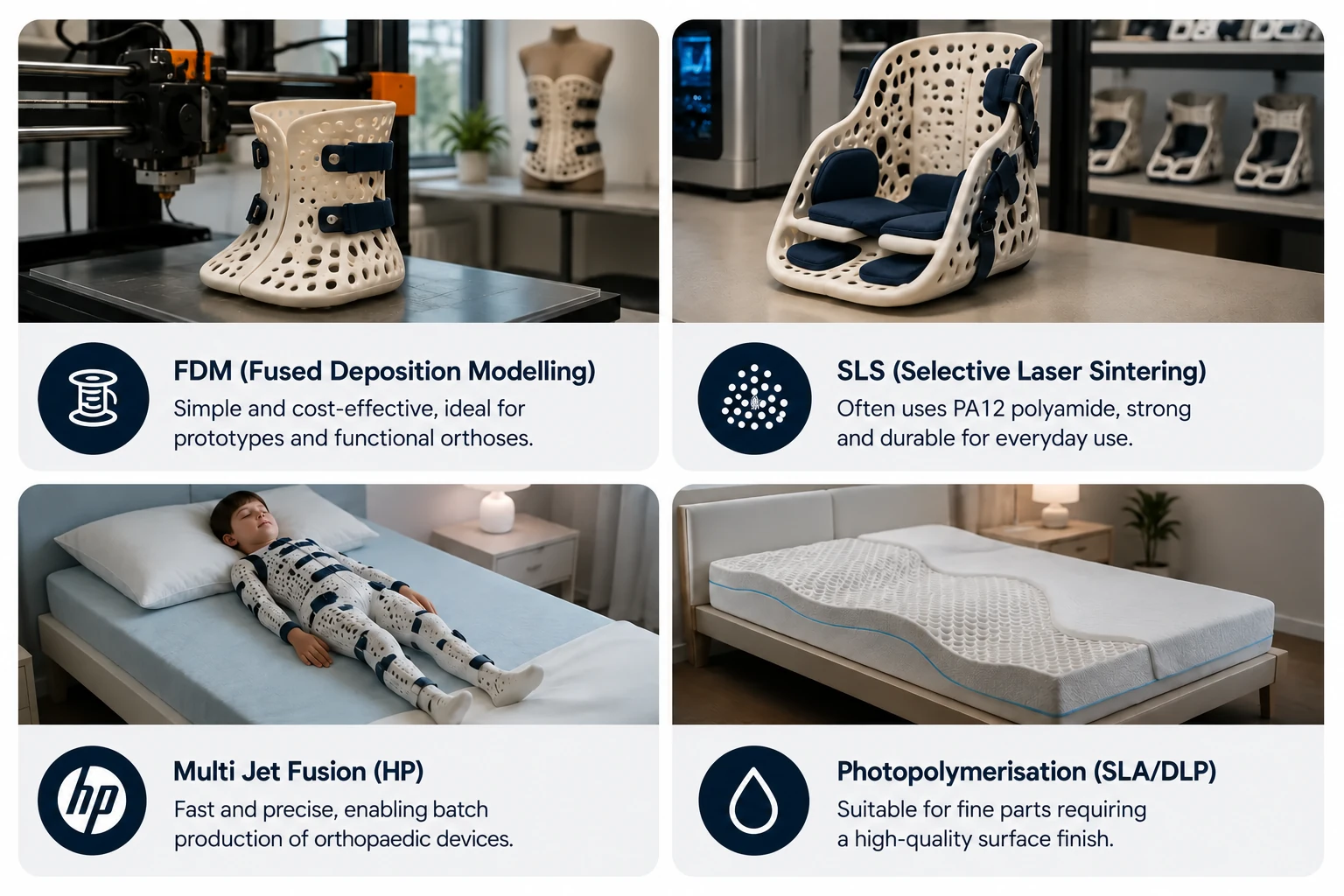
Several processes are used in 3D orthopaedics:
- FDM (fused deposition modelling): simple and cost-effective, ideal for prototypes and functional orthoses.
- SLS (selective laser sintering): often in PA12 polyamide, strong and durable for everyday use.
- Multi Jet Fusion (HP): fast and precise, enables series production of orthopaedic devices.
- Photopolymerisation (SLA/DLP): suited to thin parts requiring a carefully finished surface.
What types of prostheses and orthoses can be created?
With 3D printing, it is possible to produce a range of orthopaedic devices according to clinical needs:

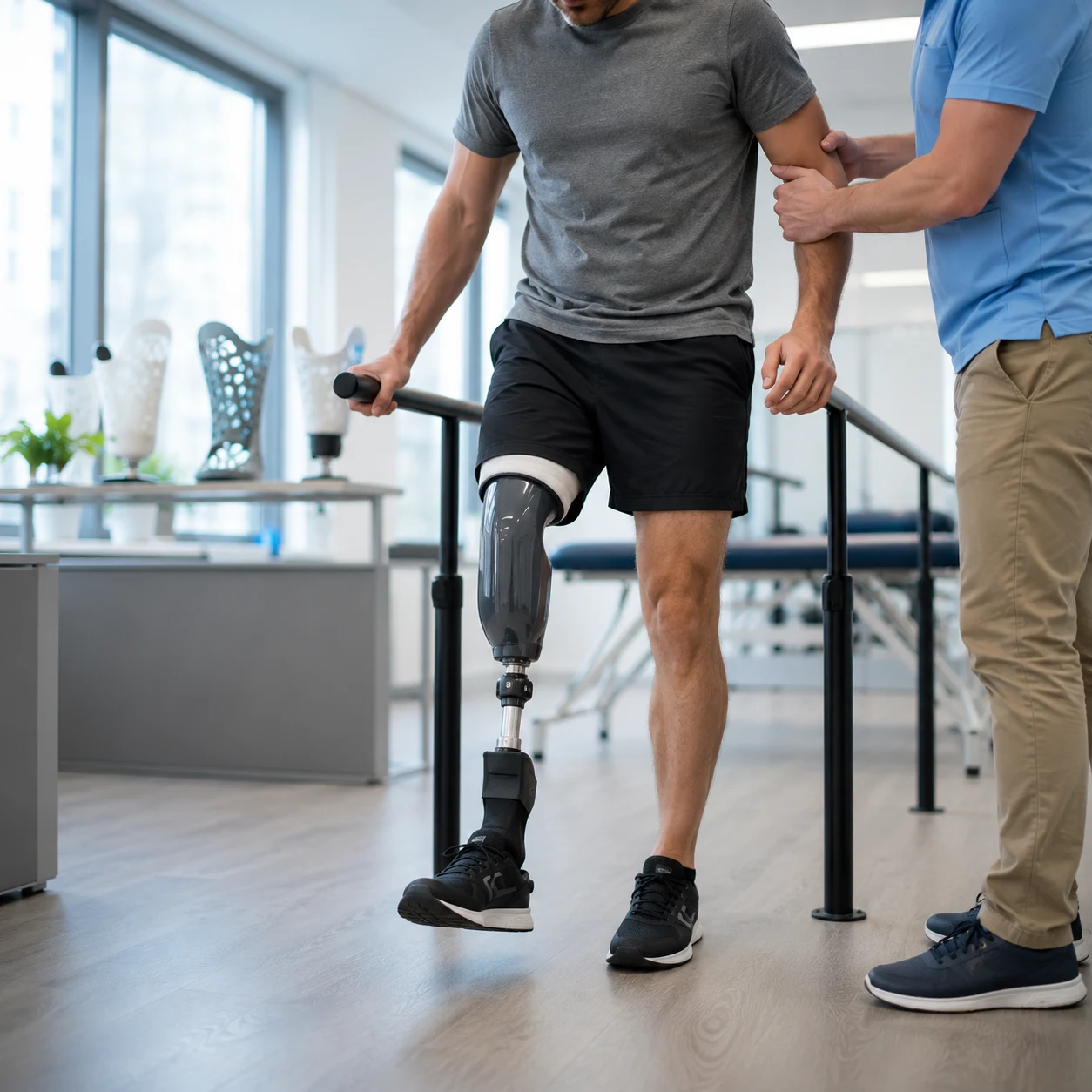
Prostheses for amputees
(arm, leg, hand).
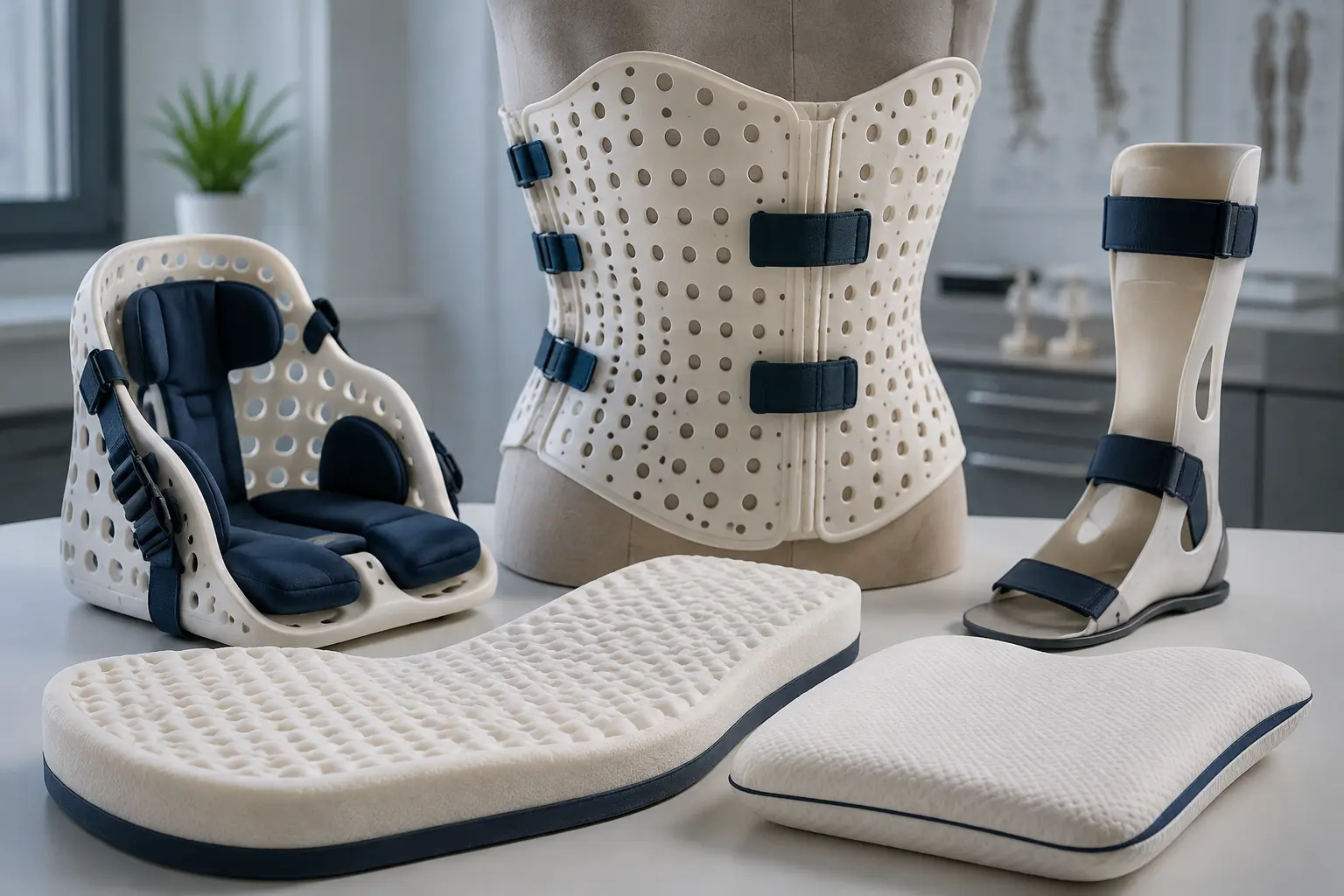
Foot orthoses
(3D orthopaedic insoles).

Splints and seating corsets
tailored to the patient’s morphology.

Functional parts
(e.g. sockets, structural components).

Innovative functional solutions
such as open-work, lightweight and ventilated designs.
How does 3D printing help amputees?
For an amputated limb, 3D printing represents genuine progress:
- Creation of a precise socket that reduces friction.
- Lighter, more comfortable prostheses.
- Shorter time between taking measurements and delivery.
- Improved rehabilitation thanks to devices that are better tolerated by the patient.
Which materials are used?
Depending on the type of device, several materials can be used in orthopaedic 3D printing:
- Polyamide (PA12): strong, lightweight and flexible.
- Carbon fibre: high rigidity for sports prostheses.
- High-precision resins: suited to splints or thin orthoses.
- Elastomers: soft materials to improve comfort in direct skin contact.
Solutions offered by Twin 3D
Twin 3D provides prosthetists-orthotists and medical teams with tools dedicated to medical 3D printing and design:
- Certified software for scan clean-up and device design.
- Printed devices: software for creating templates adapted to prostheses, orthoses and splints (pattern-making).
- Technical support: installation, training and support.
- Advice on materials and processes: from polyamide to carbon fibre.
Our goal: to provide healthcare professionals and prosthetists-orthotists with reliable tools to develop high-quality devices that are faster to produce and better accepted by patients.
FAQ
Yes. Twin 3D offers sessions tailored to orthotists and prosthetists to help them integrate 3D modelling and 3D printing into their practice.
Greater comfort, better-fitting devices, time saved in patient care and lighter devices.
Twin 3D offers annual, perpetual or floating licences, depending on the needs of each organisation.
Yes. It uses standard formats (STL, OBJ, DICOM) that are compatible with the equipment already in place in workshops and laboratories.
Polyamide, carbon fibre, resins and elastomers, depending on the mechanical requirements and the clinical application.
Other allied health specialties
They trust us








Book a demonstration
Twin 3D supports healthcare professionals in their medical 3D projects. Speak with an expert and discover our solutions during a demonstration.