
3D technologies and 3D printing applied to maxillofacial surgery
Maxillofacial surgery is evolving with the arrival of 3D technologies. Surgeons face major challenges: precision of procedures, reduced intraoperative time, and anticipation of risks and complications.
At Twin 3D, we offer practical solutions: segmentation, 3D modelling, computer-assisted planning, design of patient-specific devices and additive manufacturing of implants, surgical guides and anatomical models. The aim: to make procedures safer, faster and tailored to each patient.
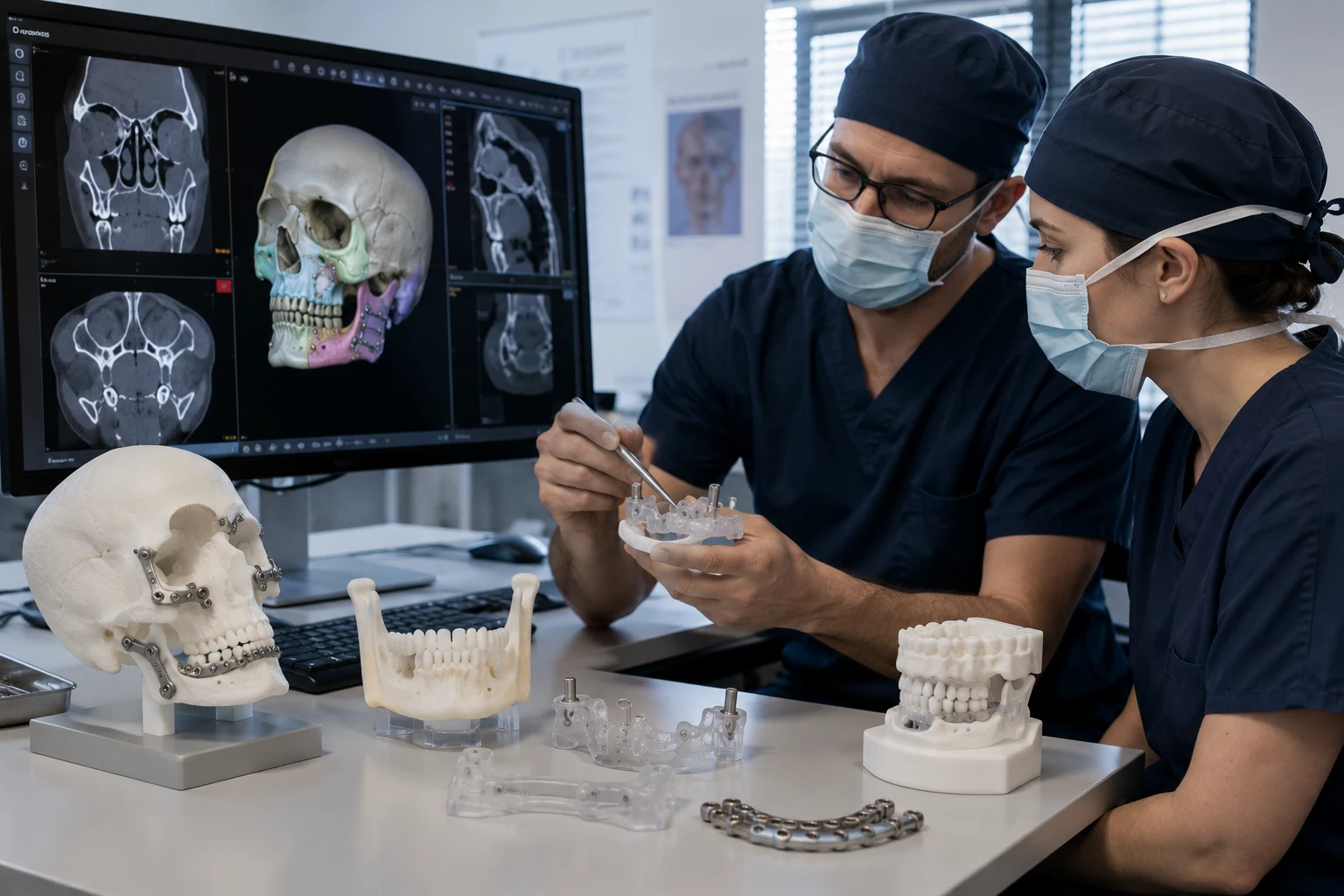

What are the benefits of 3D printing?
3D printing is revolutionising maxillofacial surgery:

Precision
Segmentation and faithful 3D modelling of the anatomy from the patient’s clinical imaging, with preoperative simulation.

Reduced operating time
Printed guides reduce adjustment and positioning times in the operating theatre.

Optimised surgical planning
Finer anticipation of the procedure and its outcomes.

Improved aesthetic and functional results
Positioning that matches the planning of the custom-made bone reconstruction.
For the surgeon, it means greater safety and time savings. For the patient, better care and greater comfort after the procedure.
How does 3D-assisted
maxillofacial surgery work?
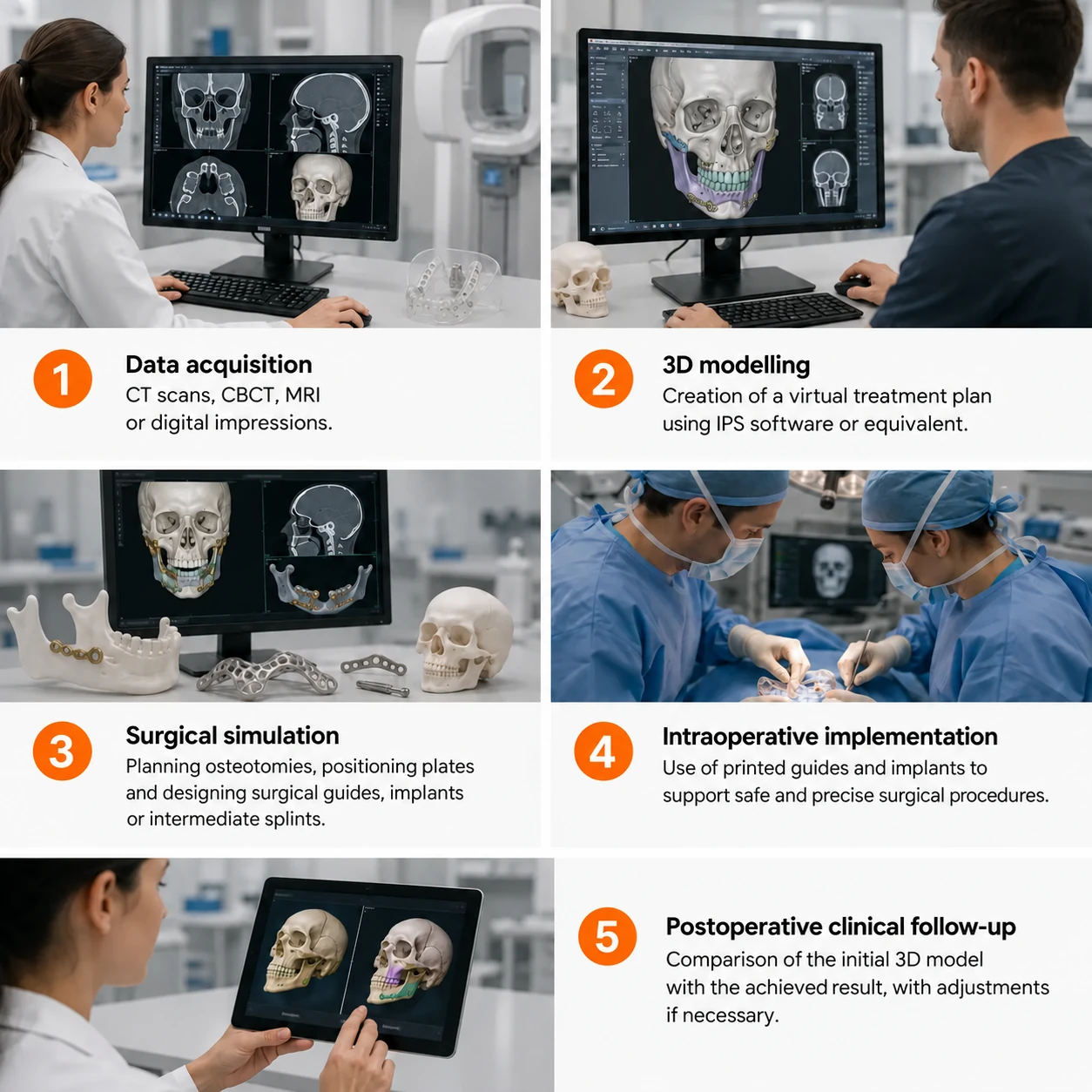
3D is integrated into every stage of the surgical pathway:
-
1
Data acquisition: CT scan, CBCT, MRI or digital impressions.
-
2
3D modelling: creation of the virtual treatment plan using IPS software or equivalent.
-
3
Simulation of the procedure: anticipation of osteotomies, plate positioning and design of surgical guides, implants or intermediate splints.
-
4
Implementation in the operating theatre: use of printed guides and implants to secure every step.
-
5
Postoperative clinical follow-up: comparison between the initial 3D model and the result obtained, with adjustments if necessary.
What is 3D planning in maxillofacial surgery?
Computer-assisted 3D planning makes it possible to:
- in orthognathic surgery: simulate the repositioning of the jaws and anticipate dental occlusion,
- in reconstructive surgery: define the shape and placement of titanium implants,
- in aesthetic surgery: visualise facial proportions before the procedure.
Result: a more predictable procedure, with improved aesthetic and functional outcomes.
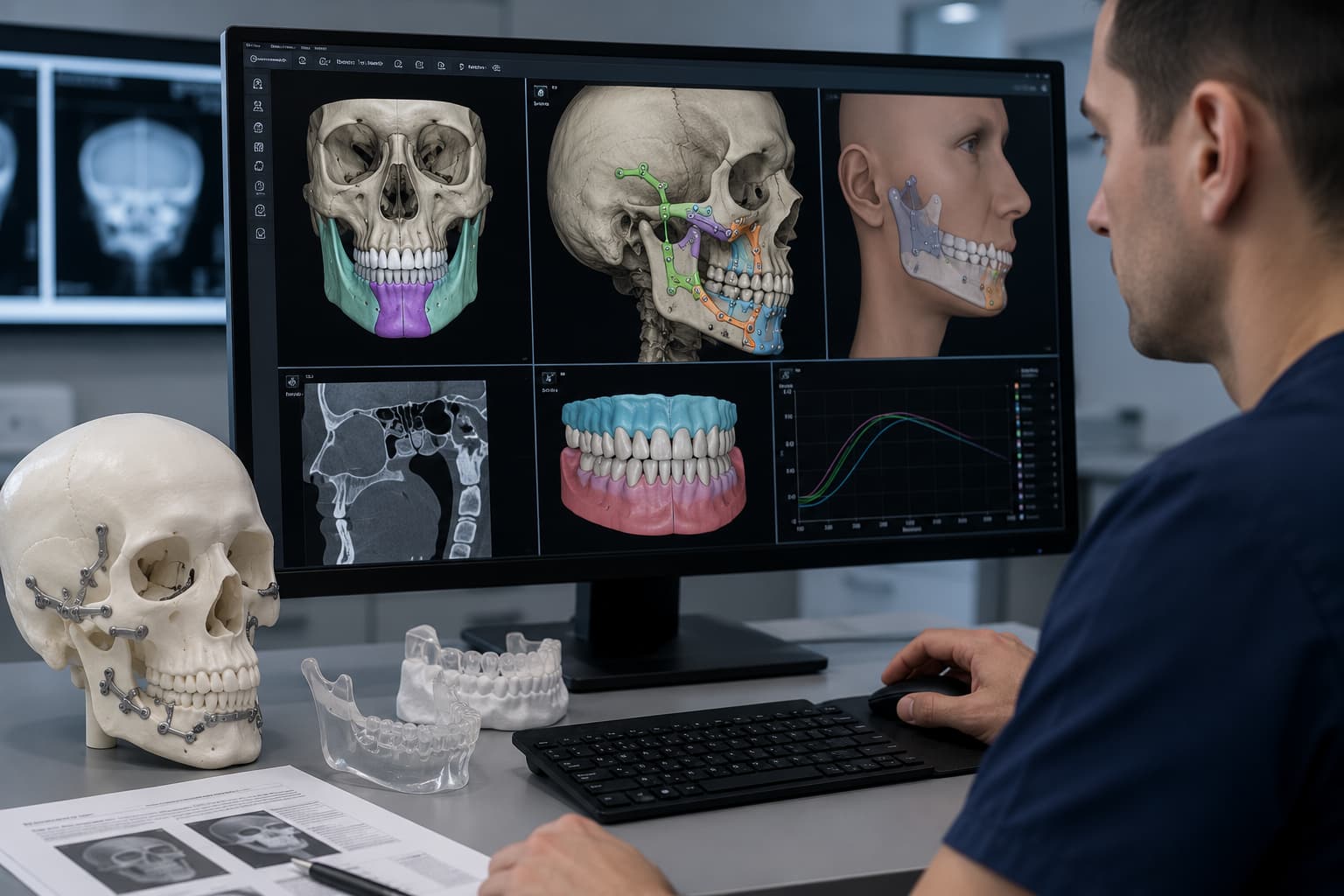
What tools are used in 3D surgery?
Digital solutions rely on several complementary tools:

Planning software
for surgical simulation.

Surgical guides and 3D models
for guided, precise surgery.

Custom titanium implants
for bone reconstruction.

Intermediate splints
to guide mandibular repositioning.

Medical 3D printers
and biocompatible materials validated for surgical use.
Which types of maxillofacial procedures are concerned?
3D printing applies to various fields of maxillofacial surgery:
- Reconstructive surgery: custom plates and implants following trauma, tumour or bone loss.
- Orthognathic surgery: correction of dentomaxillary malpositions with guides and splints.
- Aesthetic surgery: 3D simulation and custom-made facial implants to correct asymmetry or improve proportions.
- Cancer surgery: removal of one or more tumours followed by reconstruction.
- Congenital malformations: planning and custom prostheses for cleft lip and palate and bone anomalies.
Solutions offered by Twin 3D
Twin 3D supports maxillofacial surgery departments with:
- Certified software for segmentation, modelling, surgical planning and the design of patient-specific devices (guides, implants, splints)
- Tailored support: installation, team training, updates and technical follow-up, from digital preparation to postoperative follow-up.
- A complete ecosystem: integration of our solutions with your software and equipment and/or access to our network of partners specialising in 3D printers, scanners and regulatory certification.
Our mission: to turn your surgical projects into reliable, innovative solutions tailored to each patient.
Solutions offered by Twin 3D

Specialist software

Robotic arms


Training courses
FAQ
Yes. Twin 3D supports medical teams with tailored training, to integrate 3D planning and printing effectively into their workflow and enable them to be as autonomous as possible in their work.
Other medical and surgical specialities
They trust us









Book a demonstration
Twin 3D supports healthcare professionals in their medical 3D projects. Speak with an expert and discover our solutions during a demonstration.