
3D technology and printing applied to neurosurgery
Neurosurgery is evolving with the integration of 3D technologies. Digital modelling, surgical simulation and personalised implants and surgical guides help to improve precision, anticipate complications and reduce operating times.
At Twin 3D, we support neurosurgery departments with planning solutions, 3D printing and custom-made devices (spinal and cranial implants, anatomical models, surgical guides) tailored to each patient.
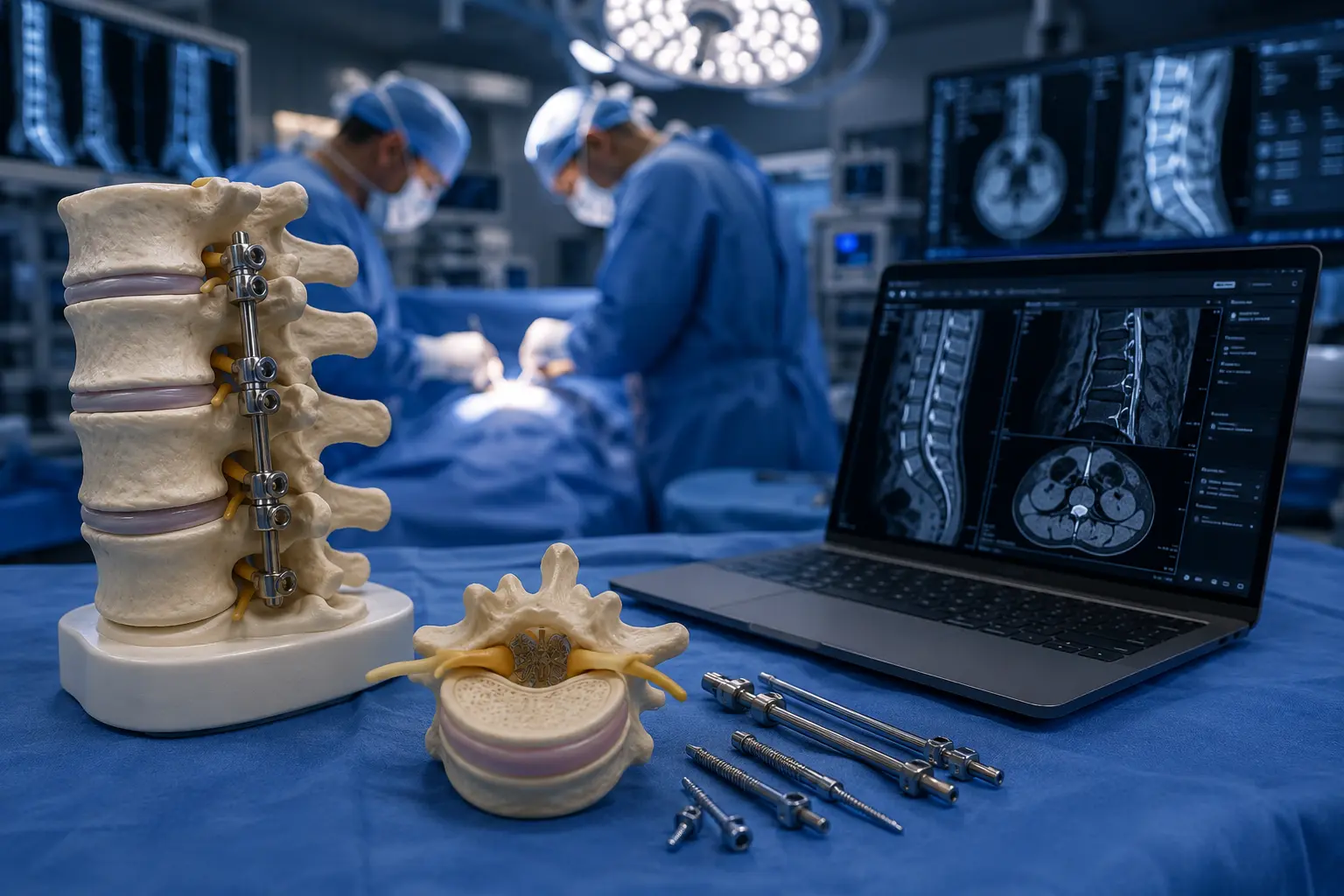
How does 3D printing help in neurosurgery?
3D printing brings concrete benefits to neurosurgery departments:
- Surgical simulation: virtual or physical 3D models to anticipate surgical procedures.
- Enhanced precision: faithful reproduction of the patient’s anatomy from CT scans and MRI.
- Optimised preparation: detailed surgical planning, reducing complications and intraoperative time.
- Reduced risks: better visualisation of high-risk areas, minimising complications.
Result: safer procedures that are better suited to the specific needs of each patient.
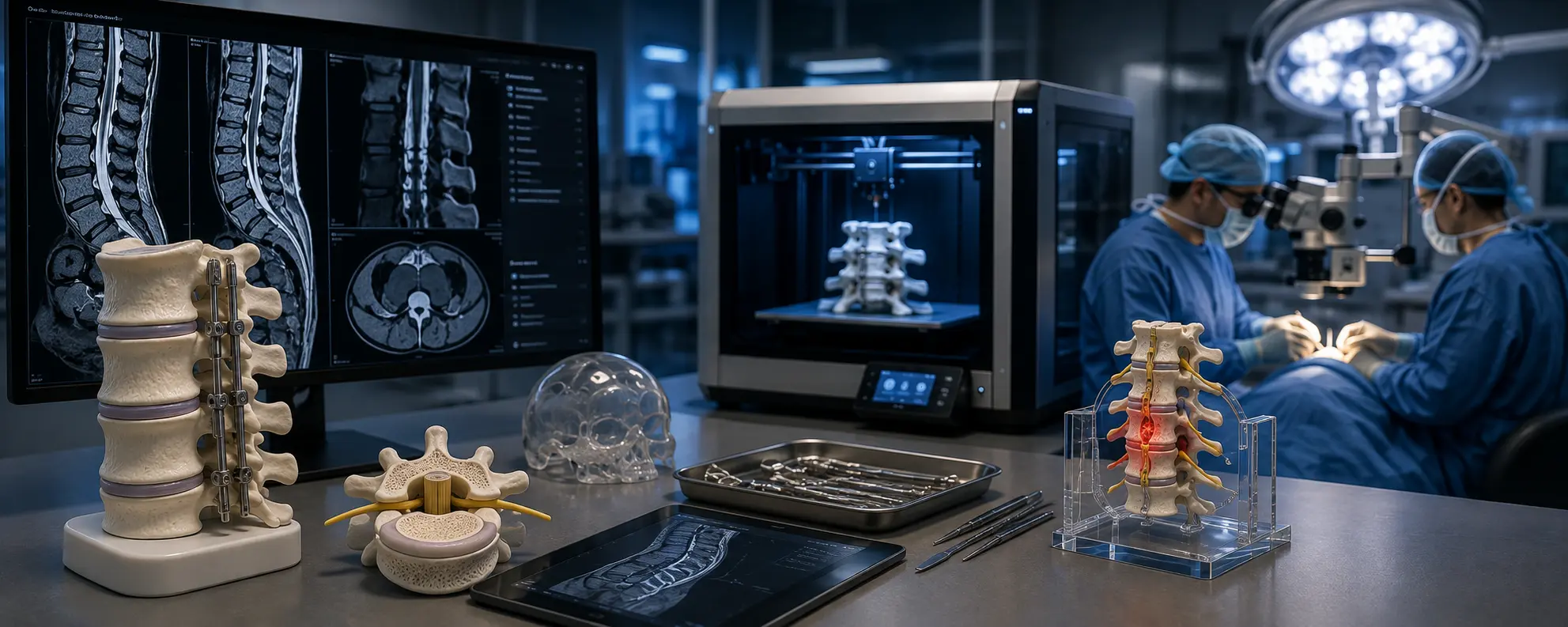
What are the applications of 3D printing in neurosurgery?
Uses vary according to clinical needs:

Printed models
For preparation and teaching (simulation before surgery).

Custom cranial implants
Following trauma or a tumour.

Spinal implants
Tailored to the patient’s anatomy.

Surgical guides
To facilitate the positioning of instruments, implants and osteotomies.

What are the advantages of 3D printing?
3D in neurosurgery offers:

Precision and personalisation
of medical devices.

Technological innovation
improving preparation and efficiency.

Reduced surgical risks
and surgical time.

Anatomical models
for planning and medical education.
Surgeons benefit from reliable tools, and patients from safer care.
How does the 3D printing process work?
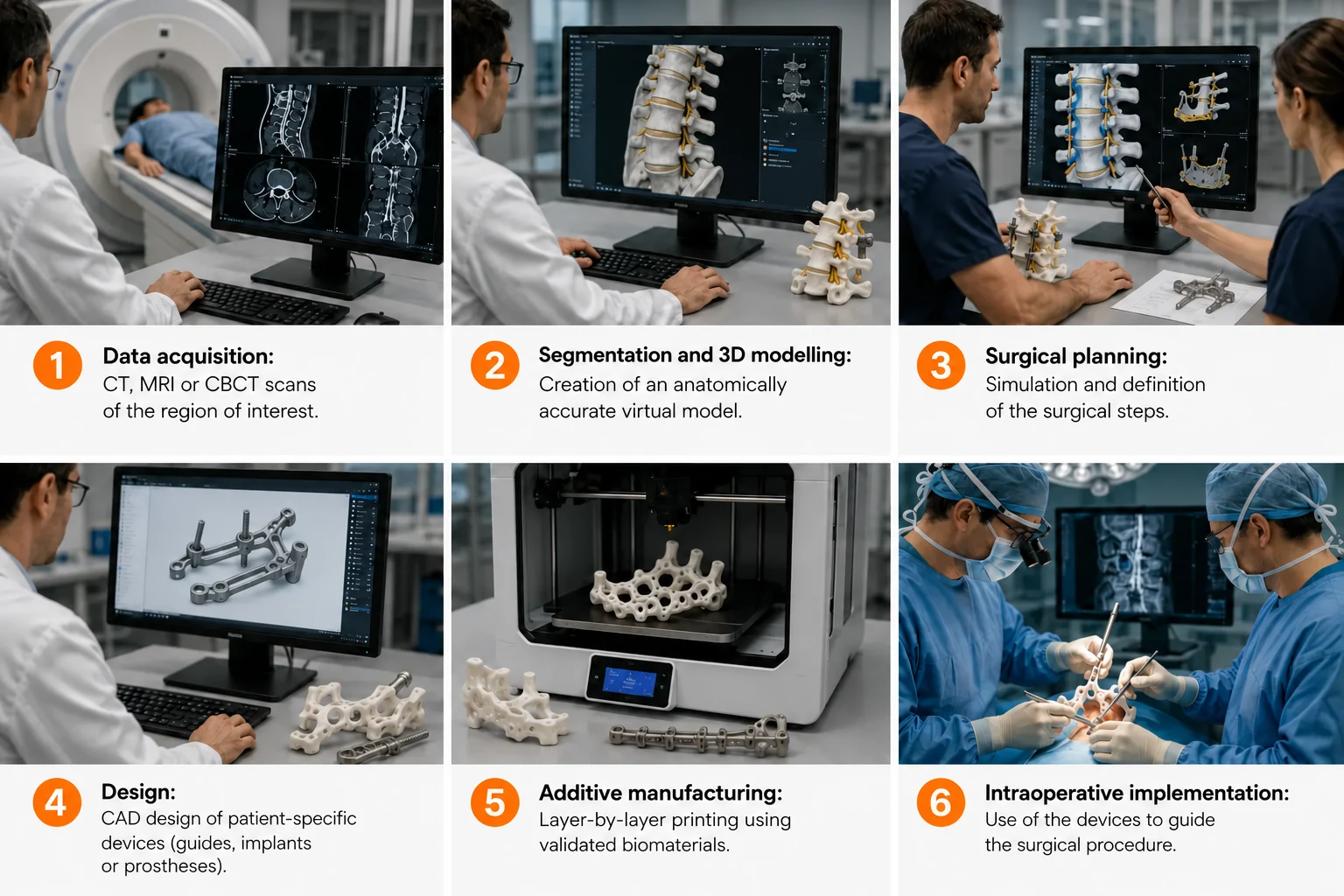
A structured digital workflow takes you from medical imaging to the custom-made implant:
-
1
Data acquisition: CT scan, MRI or CBCT of the area of interest.
-
2
Segmentation and 3D modelling: creation of a virtual model faithful to the anatomy.
-
3
Surgical planning: simulation and definition of the surgical procedures
-
4
Design: computer-aided design (CAD) of patient-specific devices (guides, implants or prostheses)
-
5
Additive manufacturing: layer-by-layer printing with validated biomaterials.
-
6
Use in the operating theatre: using the devices to guide the procedure.
What types of implants can be created?
Additive manufacturing makes it possible to design a range of neurosurgical implants:
- Patient-specific cranial and spinal implants: (titanium, polymers).
- Bioresorbable implants that promote bone regeneration.
- Custom-made prostheses to replace an area affected by a tumour.
How is 3D printing changing surgical planning?
With 3D, surgical planning becomes more precise and predictive:
- Creation of virtual 3D models to simulate the procedure.
- Anticipation and rehearsal of complex surgical procedures.
- Exact definition of the positioning of implants and prostheses.
- Fewer complications and fewer adjustments during the surgical procedure.
This development improves safety, comfort and the final outcome for patients.
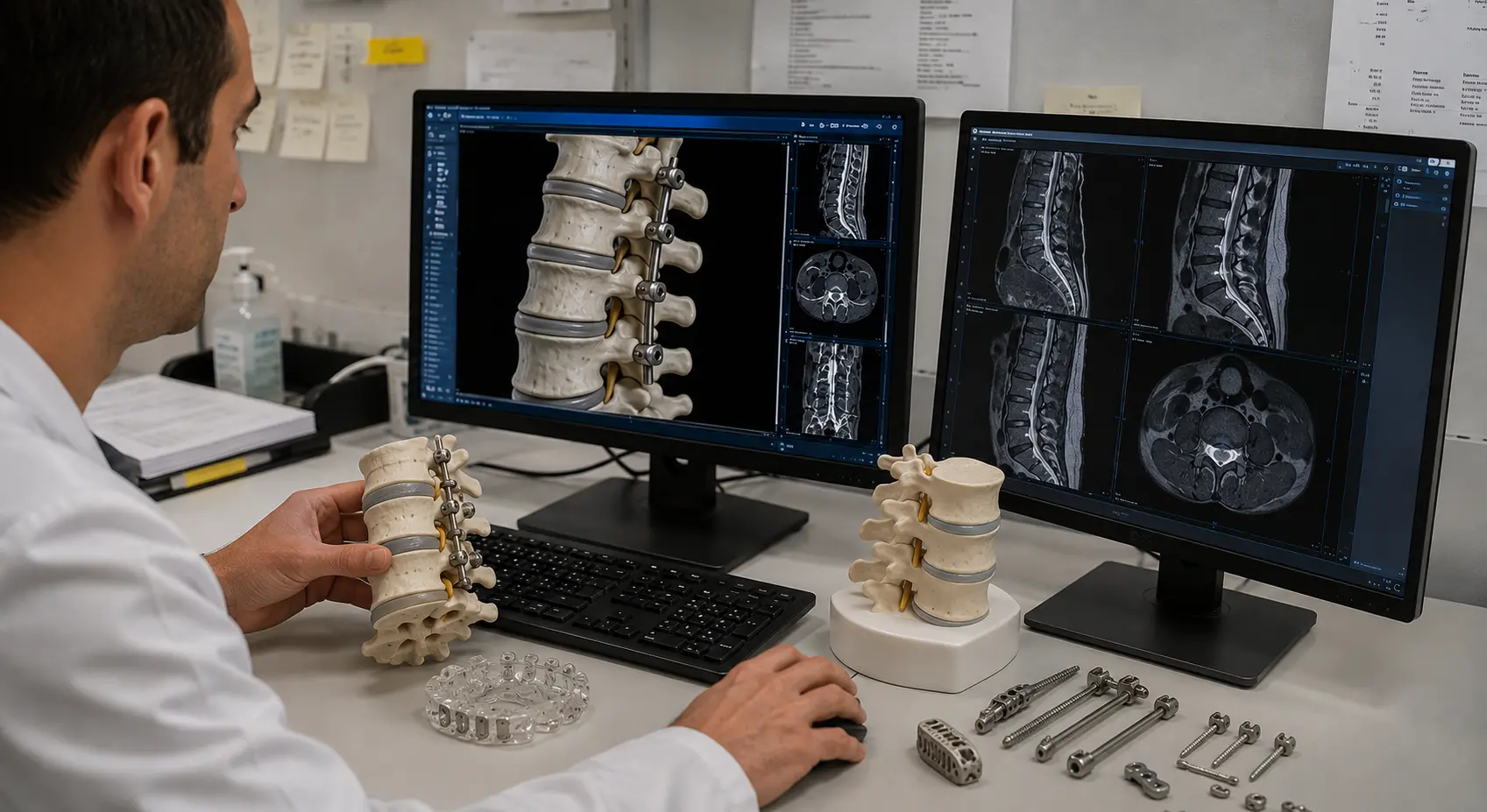
Solutions offered by Twin 3D
Twin 3D supports neurosurgery departments with:
- Certified software for segmentation, 3D modelling, design (CAD) and surgical planning.
- Personalised devices: cranial implants, anatomical models, surgical guides.
- Comprehensive support: training, technical support and clinical follow-up for medical teams.
- Complete ecosystem: integration of our solutions with your software and equipment and/or access to our network of partners specialising in 3D printers, scanners and regulatory certification.
Our goal: to bring your neurosurgical projects to life with custom solutions at the cutting edge of innovation.
FAQ
Yes. Our software and devices comply with the medical regulations in force (MDR in Europe, FDA in the United States). They meet the safety and traceability requirements necessary for integration into neurosurgery.
Our software covers a wide range of neurosurgical applications: custom cranial implants, patient-specific surgical guides for drilling or cutting (osteotomy), anatomical models for simulation, bioresorbable prostheses, and advanced surgical planning for tumours, malformations or complex reconstructions.
Yes. We offer floating licences to make it easier for several users or departments within the same institution to use our software. This allows resources to be shared efficiently while reducing costs.
Yes. Our solutions integrate into the surgical workflow, supported by tailored training. Twin 3D supports your teams (surgeons, technicians, biomedical engineers) to ensure a quick and effective start, either on site or remotely.
Yes. We work with standard formats (DICOM, STL, OBJ…), ensuring compatibility with most medical scanners, imaging software and medical 3D printers already in use in hospitals and clinics.
Other medical and surgical specialties
They trust us









Book a demonstration
Twin 3D supports healthcare professionals in their medical 3D projects. Speak with an expert and discover our solutions during a demonstration.